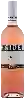
The Winery Haiden of Burgenland of Weinland
The Winery Haiden is one of the best wineries to follow in Burgenland.. It offers 24 wines for sale in of Burgenland to come and discover on site or to buy online.
Looking for the best Winery Haiden wines in Burgenland among all the wines in the region? Check out our tops of the best red, white or effervescent Winery Haiden wines. Also find some food and wine pairings that may be suitable with the wines from this area. Learn more about the region and the Winery Haiden wines with technical and enological descriptions.
How Winery Haiden wines pair with each other generally quite well with dishes of beef, lamb or game (deer, venison) such as recipes of sauté of lamb with curry, mathieu's lamb tagine or marinated duck with honey and five spices.
On the nose the red wine of Winery Haiden. often reveals types of flavors of red fruit. In the mouth the red wine of Winery Haiden. is a powerful with a nice balance between acidity and tannins.
Burgenland is a large wine-producing region on the eastern border of Austria. Despite the country's image as the producer of some of the world's finest white wines, Austria is also home to a thriving red wine culture: Burgenland, with its sunny, continental summers, is the country's key red wine region, with its wines based mainly on the Blaufränkisch and Zweigelt grape varieties. Sweet, botrytized wines are also a specialty of the region, particularly in the Terroir surrounding the Neusiedlersee lake.
The region occupies a narrow strip of land that runs from the Danube River down to Steiermark in the South.
On its eastern side is the border with Hungary, and to the west Lies the most eastern foothills of the Alps. Steiermark aside, Burgenland is one of Austria's southernmost wine regions, and topographically is more aligned with Hungary than with much of the rest of Austria.
Burgenland is home to four DAC appellations: from North to south; Neusiedlersee, Leithaberg, Mittelburgenland and Eisenberg. Within each of these zones, any wines which do not conform to the particular classification are labeled with the Burgenland appellation
Burgenland's Lake Neusiedl (Neusiedlersee) is one of the viticultural focus points of the region.
It stores summer heat from the Pannonian Plain, an expansive, Warm area which covers much of Hungary and eastern Austria, effectively lengthening the ripening season into autumn. Humidity from the lake promotes the spread of noble rot (Botrytis cinerea) in the regions of Seewinkel and Rust.
The Ausbruch, Beerenauslese and Trockenbeerenauslese wines that are made near the lake are among the finest and most sought-after in the world. However the Neusiedlersee DAC applies to red wines based on the Zweigelt grape variety.
How Winery Haiden wines pair with each other generally quite well with dishes of pork, rich fish (salmon, tuna etc) or shellfish such as recipes of sloth pork loin, tuna with tomatoes in the oven or mi sao.
Merlot noir is a grape variety that originated in France (Bordeaux). It produces a variety of grape specially used for wine making. It is rare to find this grape to eat on our tables. This variety of grape is characterized by small to medium sized bunches, and medium sized grapes. Merlot noir can be found in many vineyards: South West, Languedoc & Roussillon, Cognac, Bordeaux, Loire Valley, Armagnac, Burgundy, Jura, Champagne, Rhone Valley, Beaujolais, Provence & Corsica, Savoie & Bugey.
How Winery Haiden wines pair with each other generally quite well with dishes of veal, pork or game (deer, venison) such as recipes of escargots à la bordelaise, oven-baked sausage or rabbit on the barbecue.
Generic term for wines containing residual sugar (natural sugars in the grapes that have not been transformed into alcohol). It is also used to describe a wine with a dominantly sweet flavour, without further explanation.
Planning a wine route in the of Burgenland? Here are the wineries to visit and the winemakers to meet during your trip in search of wines similar to Winery Haiden.
Müller-Thurgau shows the character of its noble origins. This Swiss white grape variety is a cross between the royal madeleine and the riesling. The idea that the latter was crossed with the sylvaner is irrelevant. The variety can be recognized by its vigorous character and its semi-erect habit. Preferring rich soils and short prunings, the plant sees its buds open quite early. The buds are cottony and soft green in color. The slightly embossed and tormented blade, with 5 to 7 lobes, makes it possible to distinguish the adult leaves. The clusters appear compact, pyramidal or cylindrical in shape and small to medium in size. The flavour of the Müller-Turgau berries is reminiscent of Muscat. The juicy and crunchy pulp is revealed under a greyish skin. When ripe, the fruit has a mottled shell on a golden yellow background. Switzerland prefers to extract the juice from this variety. The wine made from it is rather heavy and does not keep well.