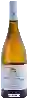
The Winery Gilles Noblet of Mâconnais of Burgundy
Winery Gilles Noblet
The winery offers 15 different wines
4.0


Note - 1Note - 1Note - 1Note - 1Note - 0
Its wines get an average rating of 4.
It is ranked in the top 61 of the estates of Burgundy.
It is located in Mâconnais in the region of Burgundy

The Winery Gilles Noblet is one of the world's great estates. It offers 15 wines for sale in of Mâconnais to come and discover on site or to buy online.
Top Winery Gilles Noblet wines

Looking for the best Winery Gilles Noblet wines in Mâconnais among all the wines in the region? Check out our tops of the best red, white or effervescent Winery Gilles Noblet wines. Also find some food and wine pairings that may be suitable with the wines from this area. Learn more about the region and the Winery Gilles Noblet wines with technical and enological descriptions.

The top white wines of Winery Gilles Noblet

Food and wine pairings with a white wine of Winery Gilles Noblet

How Winery Gilles Noblet wines pair with each other generally quite well with dishes of pasta, vegetarian or cured meat such as recipes of lasagne, quiche with bacon and gruyère cheese or home-made coq au vin.

Organoleptic analysis of white wines of Winery Gilles Noblet

On the nose the white wine of Winery Gilles Noblet. often reveals types of flavors of oaky, apples or peach and sometimes also flavors of butter, apricot or microbio. In the mouth the white wine of Winery Gilles Noblet. is a powerful.

The best vintages in the white wines of Winery Gilles Noblet

  • 2018With an average score of 4.25/5
  • 2012With an average score of 4.10/5
  • 2017With an average score of 4.02/5
  • 2015With an average score of 3.92/5
  • 2016With an average score of 3.90/5
  • 2013With an average score of 3.90/5

The grape varieties most used in the white wines of Winery Gilles Noblet.

  • Chardonnay

Discovering the wine region of Mâconnais

The Mâconnais wine region in Southern Burgundy is centred on the provincial town of Mâcon, from which it takes its name. The region produces a considerable amount of wine, specializing in white wines made from Chardonnay and a smaller number of red wines made from Pinot Noir and Gamay. Unlike the Côte d'Or to the North, where a band of densely planted vines runs roughly north-south across the countryside, the vineyards of the Mâconnais are more sparsely planted and interspersed with land devoted to other forms of agriculture. The landscape here is made up of rolling limestone hills, bordered to the east by the Saône River, which flows south to join the Rhône just outside Lyon.

The Climate of the Mâconnais shows signs of its proximity to the Rhône valley, with higher than average temperatures, lower rainfall and - perhaps most importantly - less risk of vine-damaging spring frosts. The southern end of the Mâconnais slightly overlaps the northern boundary of Beaujolais - itself officially Part of the Burgundy wine region, but often treated as a separate region. The title Mâcon covers white, red and rosé wines from the entire region. A number of communes within the appellation's catchment area have been recognized as sources of premium wines and may add their names to the appellation; for example, Mâcon Lugny.

Discover other wineries and winemakers neighboring the Winery Gilles Noblet

Planning a wine route in the of Mâconnais? Here are the wineries to visit and the winemakers to meet during your trip in search of wines similar to Winery Gilles Noblet.

Discover the grape variety: Nerello mascalese

A very old grape variety grown in Italy, more precisely in the north of Sicily on the slopes of Mount Etna and in Sardinia. Its origin would be Greek because it was reported in Greece in the 7th century B.C. It is the result of a natural intraspecific crossing between sangiovese or nielluccio and mantonico bianco. It should not be confused with nerello capuccio and pignatello nero. It should be noted that Nerello mascalese seems to be a grape variety adapted to altitude, as is the case in Sicily where it is planted at a rate of 6,000 and 9,000 vines per hectare. It is practically unknown in other wine-producing countries, which is certainly due to its late ripening.