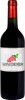
Bodegas GallegasSorballo Tinto
 Red wine
In the mouth this red wine is a powerful.
This wine generally goes well with poultry, beef or veal.
Taste structure of the Sorballo Tinto from the Bodegas Gallegas
Light | Bold | |
Smooth | Tannic | |
Dry | Sweet | |
Soft | Acidic |
In the mouth the Sorballo Tinto of Bodegas Gallegas in the region of Galice is a powerful.
Food and wine pairings with Sorballo Tinto
Pairings that work perfectly with Sorballo Tinto



Original food and wine pairings with Sorballo Tinto

The Sorballo Tinto of Bodegas Gallegas matches generally quite well with dishes of beef, pasta or veal such as recipes of roast pork with pineapple, pumpkin and courgette lasagne or stuffed quails.
Details and technical informations about Bodegas Gallegas's Sorballo Tinto.
Discover the grape variety: Italia Rubi
Pink selection made in Brazil, following a natural coloured mutation of the italia, discovered in 1981 by San Giorgio Jonico. Since 24.08.2009, it is registered in the Official Catalogue of table grape varieties, list A1. In Italy, a more colourful mutation of the Rubi was discovered, called benitaka, which is more uniform in berry colour and ripens about a week earlier. The black brasil variety, which can be found in Brazil, is said to be a natural mutation of benitaka. Finally, Rubi should not be confused with ruby seedless, also a pink apyrene grape.
Informations about the Bodegas Gallegas
The Bodegas Gallegas is one of of the world's great estates. It offers 76 wines for sale in the of Galice to come and discover on site or to buy online.

The wine region of Galice
Oceanic northwest Spain, cradle of the great Iberian whites. Signature Albarino of Rias Baixas: lively, saline whites with signature notes of citrus, white peach, white flowers, fresh almond and iodine minerality, a taut palate — a perfect match for Atlantic seafood. Also premium Godello (pear, citrus, butter), aromatic Treixadura. Supple Mencia reds (raspberry, herbs, graphite).
The word of the wine: Burgundy melon
A white grape variety from Burgundy that is not widely used in its native region, but has spread to the Nantes region. It is the exclusive variety of Muscadet. It gives a dry pale yellow wine, supple and lively, with an intense bouquet, to which maturing on lees gives fatness and aromatic complexity.