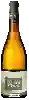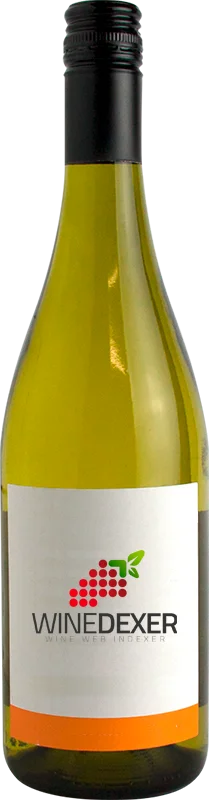
Winery Gérard et Hubert ThirotLa Doyenne
 White wine


In the mouth this white wine is a with a nice freshness.
This wine generally goes well with vegetarian, poultry or rich fish (salmon, tuna etc).
Taste structure of the La Doyenne from the Winery Gérard et Hubert Thirot
Light | Bold | |
Dry | Sweet | |
Soft | Acidic |
In the mouth the La Doyenne of Winery Gérard et Hubert Thirot in the region of Loire Valley is a with a nice freshness.
Food and wine pairings with La Doyenne
Pairings that work perfectly with La Doyenne



Original food and wine pairings with La Doyenne

The La Doyenne of Winery Gérard et Hubert Thirot matches generally quite well with dishes of rich fish (salmon, tuna etc), vegetarian or poultry such as recipes of bacalhau com natas, leek, goat cheese and bacon quiche or peach and apricot chicken (about 270 calories).
Details and technical informations about Winery Gérard et Hubert Thirot's La Doyenne.
Discover the grape variety: Chenin blanc
It most certainly originates from the Anjou region and is registered in the official catalogue of wine grape varieties on the A1 list. It can also be found in South Africa, Australia, Argentina, Chile, the United States (California), New Zealand, etc. It is said to be a descendant of Savagnin and to have sauvignonasse as its second parent (Jean-Michel Boursiquot 2019). On the other hand, Chenin blanc is the half-brother of verdelho and sauvignon blanc and is the father of colombard.
Informations about the Winery Gérard et Hubert Thirot
The Winery Gérard et Hubert Thirot is one of of the world's greatest estates. It offers 10 wines for sale in the of Haute Loire to come and discover on site or to buy online.

The wine region of Haute Loire
Haute Loire is an unofficial name for the wine-producing communes of the Loire Valley located upstream (South and east) from Touraine. It includes two of the Loire's most famous appellations - Sancerre and Pouilly-Fume - along with a number of lesser known appellations such as Orléans, Valencay, Quincy and Côtes du Forez. The concept of a "Haute Loire" sub-region is necessary because the appellations that make it up are not grouped by an administrative or historical region; their main commonality is their proximity to the Loire River. Most other French wine regions correspond closely to an administrative region or department (e.
The wine region of Loire Valley
The Loire Valley is a key wine region in western France. It follows the course of the Loire River on its Long journey through the heart of France, from the inland hills of the Auvergne to the plains of the French Atlantic coast near Nantes (Muscadet country). Important in terms of quantity and quality, the region produces large quantities (about 4 million h/l each year) of everyday wines, as well as some of France's greatest wines. Diversity is another of the region's major assets; the styles of wine produced here range from the light, tangy Muscadet to the Sweet, honeyed Bonnezeaux, the Sparkling whites of Vouvray and the juicy, Tannic reds of Chinon and Saumur.
The word of the wine: Oenographer
Wine label collector. It is becoming increasingly difficult to obtain the labels of famous vintages, which thus seek to avoid forgeries.