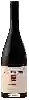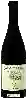
Famille Lignères - Château La BaronneMétairie du Bios Roc de Rolland
 Red wine


In the mouth this red wine is a powerful with a nice balance between acidity and tannins.
This wine generally goes well with beef, veal or pasta.
Taste structure of the Métairie du Bios Roc de Rolland from the Famille Lignères - Château La Baronne
Light | Bold | |
Smooth | Tannic | |
Dry | Sweet | |
Soft | Acidic |
In the mouth the Métairie du Bios Roc de Rolland of Famille Lignères - Château La Baronne in the region of Languedoc-Roussillon is a powerful with a nice balance between acidity and tannins.
Food and wine pairings with Métairie du Bios Roc de Rolland
Pairings that work perfectly with Métairie du Bios Roc de Rolland



Original food and wine pairings with Métairie du Bios Roc de Rolland
The Métairie du Bios Roc de Rolland of Famille Lignères - Château La Baronne matches generally quite well with dishes of beef, pasta or veal such as recipes of beef tongue in hot sauce, special' tagliatelle carbonara or pork chops with veal stock sauce.
Details and technical informations about Famille Lignères - Château La Baronne's Métairie du Bios Roc de Rolland.
Discover the grape variety: Canari
The Canary is rarely found in today's vineyards. Its origins are probably in the Pyrenees, precisely in the Ariège. Its repertoire of alternative appellations is vast. Boudalès from the Cévennes becomes folle noire in Fronton. It is also known as chalosse noire, ugne noire or canaril, and can be recognized by its early buds. The very productive vine shows remarkable vigour. Even the black rot does not get the better of this variety. The shoots are covered with foliage, the most exposed parts of which turn red in the autumn. When the grapes reach maturity, which occurs in the second late season, the Canari displays compact, section-shaped bunches of small to medium size. The fins are sometimes very crowded, gathering berries with characteristic colors. The bluish-black shell protects a very juicy flesh. A rather lightly coloured and ordinary wine emerges from the vinification of this variety.
Last vintages of this wine
The best vintages of Métairie du Bios Roc de Rolland from Famille Lignères - Château La Baronne are 2015
Informations about the Famille Lignères - Château La Baronne
The Famille Lignères - Château La Baronne is one of of the world's great estates. It offers 45 wines for sale in the of Languedoc-Roussillon to come and discover on site or to buy online.

The wine region of Languedoc-Roussillon
Languedoc (formerly Coteaux du Languedoc) is a key appellation used in the Languedoc-Roussillon wine region of southern France. It covers Dry table wines of all three colors (red, white and rosé) from the entire region, but leaves Sweet and Sparkling wines to other more specialized appellations. About 75% of all Languedoc wines are red, with the remaining 25% split roughly down the middle between whites and rosés. The appellation covers most of the Languedoc region and almost a third of all the vineyards in France.
The word of the wine: AOC
Appellation d'origine contrôlée. The most prestigious category of French wines created in the 1930s on the basis of quality criteria defined by a geographical delimitation, a chosen grape variety and precise production rules.