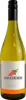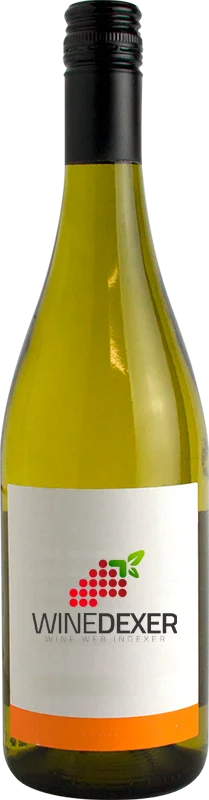
Winery Fattoria di VairaQuotidiano Bianco
 White wine



In the mouth this white wine is a powerful.
This wine generally goes well with vegetarian, appetizers and snacks or shellfish.
Taste structure of the Quotidiano Bianco from the Winery Fattoria di Vaira
Light | Bold | |
Dry | Sweet | |
Soft | Acidic |
In the mouth the Quotidiano Bianco of Winery Fattoria di Vaira in the region of Molise is a powerful.
Wine flavors and olphactive analysis


On the nose the Quotidiano Bianco of Winery Fattoria di Vaira in the region of Molise often reveals types of flavors of microbio.
Food and wine pairings with Quotidiano Bianco
Pairings that work perfectly with Quotidiano Bianco



Original food and wine pairings with Quotidiano Bianco
The Quotidiano Bianco of Winery Fattoria di Vaira matches generally quite well with dishes of shellfish, vegetarian or appetizers and snacks such as recipes of baeckeoffe with fish, leek, goat cheese and bacon quiche or baguette filled with saint moret and ham.
Details and technical informations about Winery Fattoria di Vaira's Quotidiano Bianco.
Discover the grape variety: Prima
Cross between lival and cardinal obtained in 1974. It has been registered in the official catalogue of table grape varieties, list A1, since 1996.
Last vintages of this wine
The best vintages of Quotidiano Bianco from Winery Fattoria di Vaira are 2017, 0
Informations about the Winery Fattoria di Vaira
The Winery Fattoria di Vaira is one of of the world's greatest estates. It offers 12 wines for sale in the of Molise to come and discover on site or to buy online.

The wine region of Molise
Molise is a mountainous region in South-central Italy, delegated as DOC in 1998. It is a relatively small region, especially when compared to its neighbors Abruzzo and Lazio to the North and Campania and Puglia to the south. Molise is considered an obscure region, since winemaking dates back to 500 BC, but it only gained independence as a wine region in the latter half of the 20th century. Overshadowed by its neighbor, Abruzzo, of which it was politically a Part until 1963 (Abruzzi e Molise), Molise finally got three of its own DOCs, Biferno and Pentro di Isernia, in the 1980s, then Tintilia del Molise in 2011.
The word of the wine: Malolactic fermentation
Called second fermentation or malo for short. It is the degradation (under the effect of bacteria) of the malic acid naturally present in the wine into milder, less aggressive lactic acid. Some producers or wineries refuse this operation by "blocking the malo" (by cold and adding SO2) to keep a maximum of acidity which carries the aromas and accentuates the sensation of freshness.