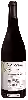
Domaine RibieraTintorela Sélection
 Red wine


In the mouth this red wine is a powerful with a nice balance between acidity and tannins.
This wine generally goes well with beef, veal or pasta.
Taste structure of the Tintorela Sélection from the Domaine Ribiera
Light | Bold | |
Smooth | Tannic | |
Dry | Sweet | |
Soft | Acidic |
In the mouth the Tintorela Sélection of Domaine Ribiera in the region of Languedoc-Roussillon is a powerful with a nice balance between acidity and tannins.
Food and wine pairings with Tintorela Sélection
Pairings that work perfectly with Tintorela Sélection



Original food and wine pairings with Tintorela Sélection
The Tintorela Sélection of Domaine Ribiera matches generally quite well with dishes of beef, pasta or veal such as recipes of express veal stew in a pressure cooker, cannelloni of meat or veal chops au gratin.
Details and technical informations about Domaine Ribiera's Tintorela Sélection.
Discover the grape variety: Petit brun
The petit brun is a black grape variety that is becoming rarer. It is found particularly in Provence, where it is one of the many other grape varieties that make up the reputation of this region. It is probably of Italian origin and is used to make the best red wines. It is known as "brun des Hautes Alpes". In order to be more productive, the vine needs to be pruned short and develops perfectly when it is well exposed. In France, Petit Brun is one of the secondary grape varieties used in the Palette appellations. The AOC Palette is considered the oldest in Provence. The wine made from petit brun is a dark red, particularly tannic. It gives off aromas of undergrowth and a floral scent. In the wines of Château Crémade, the petit brun gives them an exceptional subtlety.
Informations about the Domaine Ribiera
The Domaine Ribiera is one of of the world's greatest estates. It offers 17 wines for sale in the of Languedoc-Roussillon to come and discover on site or to buy online.

The wine region of Languedoc-Roussillon
Languedoc (formerly Coteaux du Languedoc) is a key appellation used in the Languedoc-Roussillon wine region of southern France. It covers Dry table wines of all three colors (red, white and rosé) from the entire region, but leaves Sweet and Sparkling wines to other more specialized appellations. About 75% of all Languedoc wines are red, with the remaining 25% split roughly down the middle between whites and rosés. The appellation covers most of the Languedoc region and almost a third of all the vineyards in France.
The word of the wine: Tartar (deposit)
White, chalky deposits that occur as a result of precipitation inside bottles and are often considered by consumers as a defect. They are in fact tartaric salts formed by tartaric acid, potassium and calcium naturally present in the wine. This deposit does not alter the quality of the wine and can be eliminated by a simple decanting.