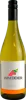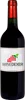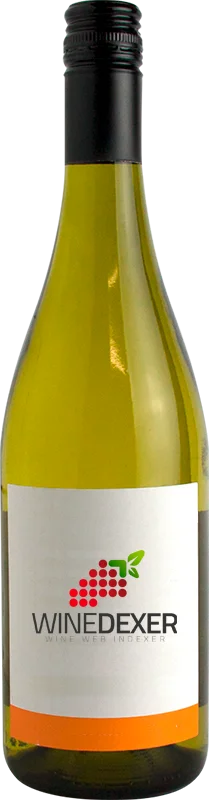
Domaine le Vieux ChêneClos Haut Valoir Vision
 White wine
In the mouth this white wine is a .
This wine generally goes well with vegetarian, poultry or lean fish.
Taste structure of the Clos Haut Valoir Vision from the Domaine le Vieux Chêne
Light | Bold | |
Dry | Sweet | |
Soft | Acidic |
In the mouth the Clos Haut Valoir Vision of Domaine le Vieux Chêne in the region of Languedoc-Roussillon is a .
Food and wine pairings with Clos Haut Valoir Vision
Pairings that work perfectly with Clos Haut Valoir Vision



Original food and wine pairings with Clos Haut Valoir Vision


The Clos Haut Valoir Vision of Domaine le Vieux Chêne matches generally quite well with dishes of pasta, vegetarian or poultry such as recipes of pasta with puttanesca sauce, goat cheese and bacon quiche or mediterranean cake with parmesan and coppa gratin.
Details and technical informations about Domaine le Vieux Chêne's Clos Haut Valoir Vision.
Discover the grape variety: Malvoisie de Lipari
A very old vine, said to have originated in Greece. It is found in Spain, including the Canary Islands, in Portugal, including Madeira, in Croatia, etc., and is virtually unknown in France. It should be noted that many varieties have the synonym "malvasia" and therefore confusion between them is always possible, such as vermentino or tourbat with the Malvasia of Lipari, whose grapes are however quite different. - Synonyms: malvasia fina, malvasia de Sitges, malvasia grossa, malvasio dubrovcka, greco di Gerace (for all the synonyms of the grape varieties, click here!)
Informations about the Domaine le Vieux Chêne
The Domaine le Vieux Chêne is one of of the world's greatest estates. It offers 36 wines for sale in the of Languedoc to come and discover on site or to buy online.

The wine region of Languedoc
Languedoc (formerly Coteaux du Languedoc) is a key appellation used in the Languedoc-Roussillon wine region of southern France. It covers Dry table wines of all three colors (red, white and rosé) from the entire region, but leaves Sweet and Sparkling wines to other more specialized appellations. About 75% of all Languedoc wines are red, with the remaining 25% split roughly down the middle between whites and rosés. The appellation covers most of the Languedoc region and almost a third of all the vineyards in France.
The wine region of Languedoc-Roussillon
Languedoc (formerly Coteaux du Languedoc) is a key appellation used in the Languedoc-Roussillon wine region of southern France. It covers Dry table wines of all three colors (red, white and rosé) from the entire region, but leaves Sweet and Sparkling wines to other more specialized appellations. About 75% of all Languedoc wines are red, with the remaining 25% split roughly down the middle between whites and rosés. The appellation covers most of the Languedoc region and almost a third of all the vineyards in France.
The word of the wine: Disgorging (champagne)
This is the evacuation of the deposit formed by the yeasts during the second fermentation in the bottle, by opening the bottle. The missing volume is completed with the liqueur de dosage - a mixture of wine and cane sugar - before the final cork is placed. For some years now, some producers have been replacing this sugar with rectified concentrated musts (concentrated grape juice) which give excellent results. A too recent dosage (less than three months) harms the gustatory harmony of the champagne.