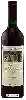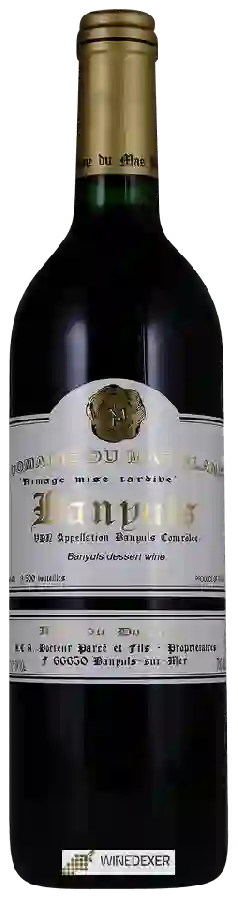
Domaine du Mas BlancRimage-Mise Tardive Banyuls
 Sweet wine


This wine generally goes well with beef and mature and hard cheese.

Food and wine pairings with Rimage-Mise Tardive Banyuls
Pairings that work perfectly with Rimage-Mise Tardive Banyuls


Original food and wine pairings with Rimage-Mise Tardive Banyuls
The Rimage-Mise Tardive Banyuls of Domaine du Mas Blanc matches generally quite well with dishes of beef or mature and hard cheese such as recipes of stuffed zucchini or mushroom, comté and morteau sausage cake.
Details and technical informations about Domaine du Mas Blanc's Rimage-Mise Tardive Banyuls.
Discover the grape variety: Carmenère
Velvety, deep reds with a dark robe and round tannins, showing aromas of blackberry, plum, ripe red pepper, dark chocolate, coffee and gentle spice. Warm, supple finish. Absolute star of Chile (Colchagua, Cachapoal, Maipo) where it was rediscovered in 1994, long confused with Merlot. A historic Bordeaux variety that nearly vanished after phylloxera, a cross of Cabernet Franc × Gros Cabernet.
Informations about the Domaine du Mas Blanc
The Domaine du Mas Blanc is one of of the world's greatest estates. It offers 22 wines for sale in the of Banyuls to come and discover on site or to buy online.

The wine region of Banyuls
AOC natural sweet wine of the Catalan Côte Vermeille, spectacular schist terrace vineyards facing the Mediterranean. Black Grenache fortified with alcohol (min. 50%, min. 75% in Grand Cru).
The wine region of Languedoc-Roussillon
Largest single French vineyard, dominated by sunny, generous reds. Spicy Syrah, candied Grenache (ripe fruit, garrigue), structured Carignan, deep Mourvèdre, supple Cinsault. Stars: structured Corbières, Minervois, Faugères, Saint-Chinian; round Côtes-du-Roussillon. Legendary vins doux naturels: Banyuls and Maury (fortified Grenache) with notes of cocoa, fig, prune.
The word of the wine: Pinenc
See servadou iron.