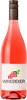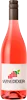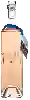
Domaine de l'AngladeLe Rosé d'Anna
 Pink wine



In the mouth this pink wine is a with a nice freshness.
This wine generally goes well with pork, vegetarian or poultry.

Taste structure of the Le Rosé d'Anna from the Domaine de l'Anglade
Light | Bold | |
Dry | Sweet | |
Soft | Acidic |
In the mouth the Le Rosé d'Anna of Domaine de l'Anglade in the region of Provence is a with a nice freshness.
Food and wine pairings with Le Rosé d'Anna
Pairings that work perfectly with Le Rosé d'Anna



Original food and wine pairings with Le Rosé d'Anna

The Le Rosé d'Anna of Domaine de l'Anglade matches generally quite well with dishes of pork, shellfish or vegetarian such as recipes of country cabbage, natural breton lobster or light tuna-tomato quiche (without cream).
Details and technical informations about Domaine de l'Anglade's Le Rosé d'Anna.
Discover the grape variety: Xinomavro
Structured, taut reds with a clear ruby robe that quickly evolves towards tawny, firm tannins and sharp high acidity (hence its name, xino-mavro = acid-black), with aromas of red cherry, sun-dried tomato, black olive, dried herbs, spice, leather and balsamic notes. Fine ageing potential, often compared to Nebbiolo. Absolute star of Naoussa PDO in Greek Macedonia, also Amyndeo PDO. Very late-ripening autochthonous Greek variety.
Last vintages of this wine
The best vintages of Le Rosé d'Anna from Domaine de l'Anglade are 2019, 2017, 0, 2015
Informations about the Domaine de l'Anglade
The Domaine de l'Anglade is one of of the world's greatest estates. It offers 11 wines for sale in the of Provence to come and discover on site or to buy online.

The wine region of Provence
World capital of dry, refined rosé (~90% of production). Pale rose-petal colour, delicate nose of fresh red fruits (strawberry, raspberry, redcurrant), citrus (pink grapefruit), white flowers and a mineral touch, taut and thirst-quenching palate — the Mediterranean aperitif par excellence. Blends of Grenache, Cinsault, Syrah, Tibouren and Mourvèdre. Fleshy Bandol reds from Mourvèdre (leather, garrigue, age-worthy), straight Cassis whites.
The word of the wine: Assemblage (Champagne)
In Champagne, it is the art of blending still wines from different grape varieties (pinot meunier, pinot noir, chardonnay), from different terroirs (villages, areas) and often from different years. The incorporation of older wines, called reserve wines, allows for greater aromatic complexity.