The Domaine Combe de Sol of La Clape of Languedoc-Roussillon
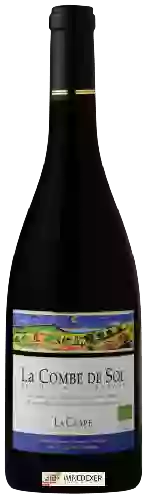
The Domaine Combe de Sol is one of the world's great estates. It offers 1 wines for sale in of La Clape to come and discover on site or to buy online.
Looking for the best Domaine Combe de Sol wines in La Clape among all the wines in the region? Check out our tops of the best red, white or effervescent Domaine Combe de Sol wines. Also find some food and wine pairings that may be suitable with the wines from this area. Learn more about the region and the Domaine Combe de Sol wines with technical and enological descriptions.
How Domaine Combe de Sol wines pair with each other generally quite well with dishes of beef, pasta or veal such as recipes of thai beef curry, one pot pasta with creamy chicken farfalle or bites of cheese.
In the mouth the red wine of Domaine Combe de Sol. is a powerful with a nice balance between acidity and tannins.
The wine region of La Clape is located in the region of Languedoc of Languedoc-Roussillon of France. Wineries and vineyards like the Château la Négly or the Château la Négly produce mainly wines red, white and pink. The most planted grape varieties in the region of La Clape are Mourvèdre, Bourboulenc and Roussanne, they are then used in wines in blends or as a single variety. On the nose of La Clape often reveals types of flavors of cherry, white pepper or apples and sometimes also flavors of dried fruit, bramble or black olive.
In the mouth of La Clape is a powerful with a nice balance between acidity and tannins. We currently count 72 estates and châteaux in the of La Clape, producing 268 different wines in conventional, organic and biodynamic agriculture. The wines of La Clape go well with generally quite well with dishes of beef, pasta or veal.
Planning a wine route in the of La Clape? Here are the wineries to visit and the winemakers to meet during your trip in search of wines similar to Domaine Combe de Sol.
Discovered in the 1870s by Mr. Robin, who lived in the Drôme at the time in Lapeyrouse-Mornay, this ancient grape variety is believed to have originated in the north of Isère. It can also be found in Switzerland. According to Thierry Lacombe (I.N.R.A./Montpellier), it is the result of a natural intraspecific crossing between Tressot Noir and Mondeuse Blanche. It should be noted in passing that, on the one hand, it has exactly the same parents as the mondeuse noire, that on the other hand, it is the mother of the diolinoir and, finally, is related to the servanin. Robin noir is not widely propagated today because it is not well known, although it is listed in the Official Catalogue of Wine Grape Varieties, list A1.


