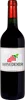
Winery DelaviñaCabernet Sauvignon - Tempranillo
 Red wine


This wine is a blend of 2 varietals which are the Cabernet-Sauvignon and the Tempranillo.
In the mouth this red wine is a powerful.
This wine generally goes well with poultry, beef or veal.
Taste structure of the Cabernet Sauvignon - Tempranillo from the Winery Delaviña
Light | Bold | |
Smooth | Tannic | |
Dry | Sweet | |
Soft | Acidic |
In the mouth the Cabernet Sauvignon - Tempranillo of Winery Delaviña in the region of Castille-et-Léon is a powerful.
Food and wine pairings with Cabernet Sauvignon - Tempranillo
Pairings that work perfectly with Cabernet Sauvignon - Tempranillo



Original food and wine pairings with Cabernet Sauvignon - Tempranillo

The Cabernet Sauvignon - Tempranillo of Winery Delaviña matches generally quite well with dishes of beef, pasta or veal such as recipes of steak tartare, pumpkin and courgette lasagne or veal with cream and mushrooms.
Details and technical informations about Winery Delaviña's Cabernet Sauvignon - Tempranillo.
Discover the grape variety: Cabernet-Sauvignon
Cabernet-Sauvignon noir is a grape variety that originated in France (Bordeaux). It produces a variety of grape specially used for wine making. It is rare to find this grape to eat on our tables. This variety of grape is characterized by small bunches, and small grapes. Cabernet-Sauvignon noir can be found in many vineyards: South-West, Loire Valley, Languedoc & Roussillon, Cognac, Bordeaux, Armagnac, Rhone Valley, Provence & Corsica, Savoie & Bugey, Beaujolais.
Last vintages of this wine
The best vintages of Cabernet Sauvignon - Tempranillo from Winery Delaviña are 0
Informations about the Winery Delaviña
The Winery Delaviña is one of of the world's greatest estates. It offers 11 wines for sale in the of Castille-et-Léon to come and discover on site or to buy online.

The wine region of Castille-et-Léon
Located in the northern half of the Central Iberian plateau, Castilla y León is the largest of Spain's 17 administrative regions, covering about one-fifth of the country's total area. It extends about 350 kilometres (220 miles) from central Spain to the northern coast. Just as wide, it connects the Rioja wine region to the Portuguese border. Red wines reign supreme in Castilla y León, and the Tempranillo grape is undoubtedly the king.
The word of the wine: White winemaking
White wines are obtained by fermentation of the juice after pressing. A pre-fermentation maceration is sometimes practiced to extract the aromatic substances from the skins. White wines are normally made from white grapes, but can also be made from red grapes (blanc de noirs). The grapes are then pressed as soon as they arrive at the vat house without maceration in order to prevent the colouring matter contained in the skins from "staining" the wine.