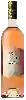
Clos St. ThomasLes Gourmets Rosé
 Pink wine


This wine generally goes well with beef, mature and hard cheese or spicy food.
Wine flavors and olphactive analysis

On the nose the Les Gourmets Rosé of Clos St. Thomas in the region of Bekaa Valley often reveals types of flavors of strawberries, tree fruit or red fruit.
Food and wine pairings with Les Gourmets Rosé
Pairings that work perfectly with Les Gourmets Rosé



Original food and wine pairings with Les Gourmets Rosé
The Les Gourmets Rosé of Clos St. Thomas matches generally quite well with dishes of beef, spicy food or mature and hard cheese such as recipes of american style beef marinade, yassa chicken (senegal) or tuna-kiri crisps.
Details and technical informations about Clos St. Thomas's Les Gourmets Rosé.
Discover the grape variety: Barlinka
- Origin : Very well known in South Africa, it was imported into this country in 1910 from Algeria and then mainly cultivated as a table grape... attempts at vinification were made but without success. It is also known in Portugal, ... in France it is almost unknown.
Last vintages of this wine

The best vintages of Les Gourmets Rosé from Clos St. Thomas are 2018, 2016, 2017, 2015 and 2013.
Informations about the Clos St. Thomas
The Clos St. Thomas is one of of the world's greatest estates. It offers 16 wines for sale in the of Bekaa Valley to come and discover on site or to buy online.

The wine region of Bekaa Valley
The Bekaa Valley is the heartland of modern Lebanese wine. Almost 90 percent of Lebanon's wine is made here, as is a respectable proportion of its Arak, the anise-flavored spirit that remains the nation's favorite alcoholic drink. The original Bekaa Valley Vineyards were planted with Cinsaut, which was subsequently joined by other French vine varieties. Most of these remain in Lebanon’s vinicultural makeup today: red Carignan, Grenache, Syrah, Mourvèdre, Cabernet Sauvignon and Merlot, and white Ugni Blanc, Clairette and Chardonnay.
The word of the wine: Vintage
Year of production of a wine, it is usually indicated on the label.