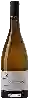
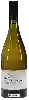
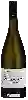
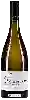
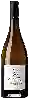
The Clos des Rocs of Mâconnais of Burgundy
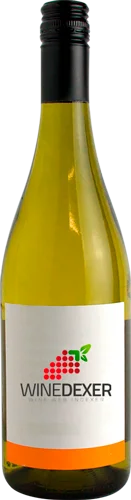
The Clos des Rocs is one of the world's great estates. It offers 15 wines for sale in of Mâconnais to come and discover on site or to buy online.
Looking for the best Clos des Rocs wines in Mâconnais among all the wines in the region? Check out our tops of the best red, white or effervescent Clos des Rocs wines. Also find some food and wine pairings that may be suitable with the wines from this area. Learn more about the region and the Clos des Rocs wines with technical and enological descriptions.
How Clos des Rocs wines pair with each other generally quite well with dishes of beef, veal or game (deer, venison) such as recipes of feijoada ( portuguese cassoulet ), calf's head with sauce ravigote or rabbit with prunes in my grandmother's style.
On the nose the white wine of Clos des Rocs. often reveals types of flavors of oaky, butter or minerality and sometimes also flavors of vanilla, apricot or honey. In the mouth the white wine of Clos des Rocs. is a powerful.
The Mâconnais wine region in Southern Burgundy is centred on the provincial town of Mâcon, from which it takes its name. The region produces a considerable amount of wine, specializing in white wines made from Chardonnay and a smaller number of red wines made from Pinot Noir and Gamay.
Unlike the Côte d'Or to the North, where a band of densely planted vines runs roughly north-south across the countryside, the vineyards of the Mâconnais are more sparsely planted and interspersed with land devoted to other forms of agriculture. The landscape here is made up of rolling limestone hills, bordered to the east by the Saône River, which flows south to join the Rhône just outside Lyon.
The Climate of the Mâconnais shows signs of its proximity to the Rhône valley, with higher than average temperatures, lower rainfall and - perhaps most importantly - less risk of vine-damaging spring frosts.
The southern end of the Mâconnais slightly overlaps the northern boundary of Beaujolais - itself officially Part of the Burgundy wine region, but often treated as a separate region.
The title Mâcon covers white, red and rosé wines from the entire region. A number of communes within the appellation's catchment area have been recognized as sources of premium wines and may add their names to the appellation; for example, Mâcon Lugny.
How Clos des Rocs wines pair with each other generally quite well with dishes of veal, pork or poultry such as recipes of osso-bucco with asian flavours, funambuline style, old-fashioned pork roll or pan bagnat.
In the mouth the red wine of Clos des Rocs. is a with a nice freshness.
The white Chardonnay is a grape variety that originated in France (Burgundy). It produces a variety of grape specially used for wine making. It is rare to find this grape to eat on our tables. This variety of grape is characterized by small bunches, and small grapes. White Chardonnay can be found in many vineyards: South West, Burgundy, Jura, Languedoc & Roussillon, Cognac, Bordeaux, Beaujolais, Savoie & Bugey, Loire Valley, Champagne, Rhone Valley, Armagnac, Lorraine, Alsace, Provence & Corsica.
Planning a wine route in the of Mâconnais? Here are the wineries to visit and the winemakers to meet during your trip in search of wines similar to Clos des Rocs.
Aubun is not to be confused with another grape variety with the same sound, aubin. This one is a black grape plant of which the Vaucluse is the probable cradle. Covering nearly 5,400 hectares of vineyards in the late 1990s, its cultivation was reduced to some 1,400 hectares in the mid-2000s. California and Australia also have discreet plantations. In the Var, Lot-et-Garonne, Gers, Ardèche and other departments, aubun is authorized, if not recommended. Its third-period ripeness promises medium to large bunches of compact, cylindrical grapes that will produce medium-quality wine. Quite alcoholic, the wine produced from Aubun is a lightly colored red. After budburst, the shoots bear young branches covered with a cottony veil. The young leaves are yellowish and downy. The older ones have pubescent, cottony blades with 5 to 7 limbs.