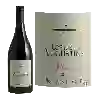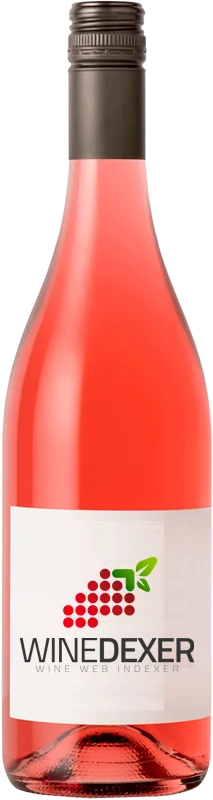
Clos des AugustinsLe Rosé d'André Pic-Saint-Loup
 Pink wine
In the mouth this pink wine is a with a nice freshness.
This wine generally goes well with vegetarian, appetizers and snacks or lean fish.
Taste structure of the Le Rosé d'André Pic-Saint-Loup from the Clos des Augustins
Light | Bold | |
Dry | Sweet | |
Soft | Acidic |
In the mouth the Le Rosé d'André Pic-Saint-Loup of Clos des Augustins in the region of Languedoc-Roussillon is a with a nice freshness.
Food and wine pairings with Le Rosé d'André Pic-Saint-Loup
Pairings that work perfectly with Le Rosé d'André Pic-Saint-Loup



Original food and wine pairings with Le Rosé d'André Pic-Saint-Loup


The Le Rosé d'André Pic-Saint-Loup of Clos des Augustins matches generally quite well with dishes of pasta, vegetarian or appetizers and snacks such as recipes of chinese bowl, magic cake cheese quiche or chorizo puff pastry.
Details and technical informations about Clos des Augustins's Le Rosé d'André Pic-Saint-Loup.
Discover the grape variety: Pineau d'Aunis
The wines produced in the Vendôme region are of excellent quality thanks to an exceptional grape variety: pineau d'aunis. For example, the red wines of the region, with their aromas of ripe red fruit and sweet spices, are a blend of Pineau d'Aunis, Cabernet Franc and Pinot Noir. The Vendôme hillsides are less than 200 km southwest of Paris. Pineau d'Aunis, a vigorous black grape variety, was first cultivated in the 9th century. It is characterized by a late budburst. Moreover, its foliage partially reddens in autumn. Although it is difficult to grow, Pineau d'Aunis is a high-yielding grape variety, producing between 40 and 80 hectolitres per hectare. It produces a wine with low alcohol content, supple, light-coloured and very aromatic. The "Pineau d'Aunis" grape variety is used as a single variety for the production of Coteaux du Vendômois. On the other hand, it is used in blends for Anjou, Rosé d'Anjou, Crémant de vallée de la Loire, Rosé de vallée de la Loire, Saumur, Saumur Champigny, Coteaux du Loir and Touraine. Finally, it is an accessory grape variety for Valençay.
Informations about the Clos des Augustins
The Clos des Augustins is one of of the world's great estates. It offers 18 wines for sale in the of Pic-Saint-Loup to come and discover on site or to buy online.

The wine region of Pic-Saint-Loup
The wine region of Pic-Saint-Loup is located in the region of Languedoc of Languedoc-Roussillon of France. Wineries and vineyards like the Domaine Ermitage du Pic Saint Loup or the Domaine de Villeneuve produce mainly wines red, pink and white. The most planted grape varieties in the region of Pic-Saint-Loup are Mourvèdre, Roussanne and Viognier, they are then used in wines in blends or as a single variety. On the nose of Pic-Saint-Loup often reveals types of flavors of earth, straw or apricot and sometimes also flavors of peach, dark chocolate or anise.
The wine region of Languedoc-Roussillon
Languedoc (formerly Coteaux du Languedoc) is a key appellation used in the Languedoc-Roussillon wine region of southern France. It covers Dry table wines of all three colors (red, white and rosé) from the entire region, but leaves Sweet and Sparkling wines to other more specialized appellations. About 75% of all Languedoc wines are red, with the remaining 25% split roughly down the middle between whites and rosés. The appellation covers most of the Languedoc region and almost a third of all the vineyards in France.
The word of the wine: Burgundy piece
228-litre barrel.