The Château Tertre de Launay of Entre-deux-Mers of Bordeaux
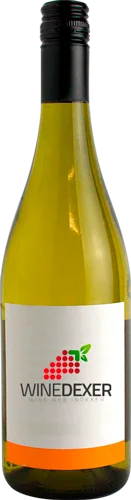
Château Tertre de Launay
The winery offers 5 different wines
3.5


Note - 1Note - 1Note - 1Note - 0.5Note - 0
Its wines get an average rating of 3.5.
This estate is part of the Vignobles Greffier.
It is ranked in the top 53 of the estates of Bordeaux.
It is located in Entre-deux-Mers in the region of Bordeaux

The Château Tertre de Launay is one of the world's great estates. It offers 5 wines for sale in of Entre-deux-Mers to come and discover on site or to buy online.
Top Château Tertre de Launay wines

Looking for the best Château Tertre de Launay wines in Entre-deux-Mers among all the wines in the region? Check out our tops of the best red, white or effervescent Château Tertre de Launay wines. Also find some food and wine pairings that may be suitable with the wines from this area. Learn more about the region and the Château Tertre de Launay wines with technical and enological descriptions.

The top white wines of Château Tertre de Launay

Food and wine pairings with a white wine of Château Tertre de Launay

How Château Tertre de Launay wines pair with each other generally quite well with dishes of pork, vegetarian or poultry such as recipes of coconut from paimpol, vegan leek and tofu quiche or chicken noodles.

Organoleptic analysis of white wines of Château Tertre de Launay

On the nose the white wine of Château Tertre de Launay. often reveals types of flavors of pineapple, tropical or citrus and sometimes also flavors of apples, green apple or lime. In the mouth the white wine of Château Tertre de Launay. is a powerful with a nice freshness.

The best vintages in the white wines of Château Tertre de Launay

  • 2017With an average score of 3.90/5
  • 2016With an average score of 3.80/5
  • 2018With an average score of 3.50/5
  • 2014With an average score of 3.45/5
  • 2015With an average score of 3.40/5
  • 2011With an average score of 3.40/5

The grape varieties most used in the white wines of Château Tertre de Launay.

  • Sémillon
  • Sauvignon Blanc
  • Muscadelle
  • Cabernet Franc
  • Merlot
  • Cabernet Sauvignon

Discovering the wine region of Entre-deux-Mers

Entre-deux-Mers is a large wine-growing sub-region of the Bordeaux region in southwestern France. Its name literally translates as "between two seas", although the seas in question are actually rivers - the Garonne and the Dordogne, which form the southern and northern boundaries of the region respectively. The Entre-deux-Mers is home to a variety of appellations, producing wines in styles ranging from the Sweet botrytised whites of Cadillac, Loupiac and Sainte-Croix-du-Mont - all close to the northeast bank of the Garonne - to the Dry table wines of Sainte-Foy and Graves de Vayres, closer to the Dordogne. The region stretching along the Garonne from the group of sweet white wine appellations to the area east of the city of Bordeaux is the red wine appellation Côtes de Bordeaux - until 2009 called Premières Côtes de Bordeaux, a title now reserved for sweet whites.

The appellations in this region can certainly be difficult to learn; Entre-Deux-Mers Haut-Benauge is for both sweet and dry whites, while in the same area Bordeaux Haut-Benauge can only be used for dry wines. The Entre-deux-Mers regional appellation title itself applies only to dry white wines made from Sauvignon Blanc, Sémillon, Muscadelle and Ugni Blanc. However, the majority of wines produced within the boundaries of the Entre-Deux-Mers AOC are instead labeled as Generic Bordeaux or superior Bordeaux. Entre-deux-Mers occupies a significant portion of the Bordeaux region, stretching from the city in the west to the farmland of Bergerac in the east.

Discover other wineries and winemakers neighboring the Château Tertre de Launay

Planning a wine route in the of Entre-deux-Mers? Here are the wineries to visit and the winemakers to meet during your trip in search of wines similar to Château Tertre de Launay.

Discover the grape variety: Cabernet franc

Cabernet Franc is one of the oldest red grape varieties in Bordeaux. The Libourne region is its terroir where it develops best. The terroirs of Saint-Emilion and Fronsac allow it to mature and develop its best range of aromas. It is also the majority in many blends. The very famous Château Cheval Blanc, for example, uses 60% Cabernet Franc. The wines produced with Cabernet Franc are medium in colour with fine tannins and subtle aromas of small red fruits and spices. When blended with Merlot and Cabernet Sauvignon, it brings complexity and a bouquet of aromas to the wine. It produces fruity wines that can be drunk quite quickly, but whose great vintages can be kept for a long time. It is an earlier grape variety than Cabernet Sauvignon, which means that it is planted as far north as the Loire Valley. In Anjou, it is also used to make sweet rosé wines. Cabernet Franc is now used in some twenty countries in Europe and throughout the world.