The Château Saint André of Vin de Pays of Pays d'Oc
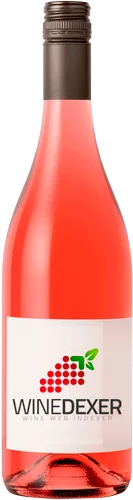
Château Saint André
The winery offers 28 different wines
3.3


Note - 1Note - 1Note - 1Note - 0Note - 0
Its wines get an average rating of 3.3.
It is ranked in the top 3591 of the estates of Pays d'Oc.
It is located in Vin de Pays in the region of Pays d'Oc
Find the Château Saint André on Facebook

The Château Saint André is one of the best wineries to follow in Vin de Pays.. It offers 28 wines for sale in of Vin de Pays to come and discover on site or to buy online.
Top Château Saint André wines

Looking for the best Château Saint André wines in Vin de Pays among all the wines in the region? Check out our tops of the best red, white or effervescent Château Saint André wines. Also find some food and wine pairings that may be suitable with the wines from this area. Learn more about the region and the Château Saint André wines with technical and enological descriptions.

The top pink wines of Château Saint André

Food and wine pairings with a pink wine of Château Saint André

How Château Saint André wines pair with each other generally quite well with dishes of pasta, vegetarian or appetizers and snacks such as recipes of thai coconut chicken with black mushrooms, quiche lorraine or tuna wraps.

The grape varieties most used in the pink wines of Château Saint André.

  • Shiraz/Syrah
  • Grenache
  • Mourvedre
  • Merlot
  • Cabernet Sauvignon

Discovering the wine region of Vin de Pays

Vin de Pays (VDP), the French national equivalent of PGI (Protected Geographical Indication) at the European level, is a quality category of French wines, positioned between Vin de Table (VDT) and Appellation d'Origine Contrôlée (AOC). This layer of the French appellation system was initially introduced in September 1968 by the INAO, the official appellation authority. It underwent several early revisions in the 1970s, followed by substantial changes in September 2000 and again in 2009, when all existing VDT titles were automatically registered with the European Union as PGI. Producers retain the choice of using either the VDP or PGI titles on their labels, or both - in the form "IGP-Vin de Pays".

There are now more than 150 VDP/IGP titles, mainly covering the southern third of France. The "Vin de Pays" level is intended to benefit both consumers and wine producers. It allows consumers to know clearly where a wine comes from, while producers are empowered to produce wine outside the constraints of traditional AOC laws. The most obvious freedoms are the higher yields allowed and a more comprehensive list of permitted Grape varieties.

The top red wines of Château Saint André

Food and wine pairings with a red wine of Château Saint André

How Château Saint André wines pair with each other generally quite well with dishes of beef, pasta or veal such as recipes of venison stew to be prepared the day before, pasta gratin carbonara style or beef mironton.

Organoleptic analysis of red wines of Château Saint André

In the mouth the red wine of Château Saint André. is a powerful with a nice balance between acidity and tannins.

The best vintages in the red wines of Château Saint André

  • 2015With an average score of 3.60/5
  • 0With an average score of 3.20/5
  • 2016With an average score of 3.20/5
  • 2017With an average score of 3.10/5

The grape varieties most used in the red wines of Château Saint André.

  • Shiraz/Syrah
  • Grenache
  • Mourvedre

Discover the grape variety: Mourvèdre

Mourvèdre noir is a grape variety originating from Spain. It produces a variety of grape specially used for wine making. It is rare to find this grape to eat on our tables. This variety of grape is characterized by medium to large bunches, and grapes of medium size. Mourvèdre noir can be found in several vineyards: South-West, Cognac, Bordeaux, Provence & Corsica, Rhône valley, Languedoc & Roussillon, Loire valley, Savoie & Bugey, Beaujolais.

The top white wines of Château Saint André

Food and wine pairings with a white wine of Château Saint André

How Château Saint André wines pair with each other generally quite well with dishes of pasta, vegetarian or poultry such as recipes of leek and salmon lasagna, quiche lorraine or coconut chicken curry in thermomix.

Organoleptic analysis of white wines of Château Saint André

In the mouth the white wine of Château Saint André. is a with a nice freshness.

The grape varieties most used in the white wines of Château Saint André.

  • Marsanne
  • Viognier
  • Roussanne

The word of the wine: Fleshed out

A full-bodied, tasty and fleshy wine, with velvety and smooth tannins.

The top sweet wines of Château Saint André

Food and wine pairings with a sweet wine of Château Saint André

How Château Saint André wines pair with each other generally quite well with dishes such as recipes .

Discover the grape variety: Grenache

Grenache noir is a grape variety that originated in Spain. It produces a variety of grape specially used for the elaboration of wine. It is rare to find this grape to eat on our tables. This variety of grape is characterized by medium to large bunches, and grapes of medium size. Grenache noir can be found in many vineyards: South West, Cognac, Bordeaux, Provence & Corsica, Languedoc & Roussillon, Rhone Valley, Loire Valley, Savoie & Bugey, Beaujolais.

Discover other wineries and winemakers neighboring the Château Saint André

Planning a wine route in the of Vin de Pays? Here are the wineries to visit and the winemakers to meet during your trip in search of wines similar to Château Saint André.

Discover the grape variety: Marsanne

Marsanne is a white grape variety that originated in Montélimar in the Drôme, several centuries ago. Marsanne is also found in Cassis, Savoie, Languedoc-Roussillon and Saint-Péray in the Ardèche, where it produces remarkable sparkling wines. The warm, sunny climate of the Rhone Valley, Languedoc-Roussillon and Provence, as well as the dry, stony soil, are ideal conditions for its development. Its bunches are quite large and provide small, juicy berries that are sensitive to grey rot and strong winds. These two grape varieties complement each other perfectly: together they give light wines with little acidity, aromas of yellow fruit, white fruit and flowers with notes of honey and liquorice. This is for example what the appellations Saint-Péray, Hermitage, Crozes-Hermitage, Saint-Joseph, Côtes-du-Vallée du Rhône, Corbières, or Cassis express... which represent about 700 hectares.