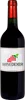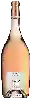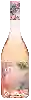
Château RoubineLa Vie En Rose Bio
 Pink wine
This wine is a blend of 3 varietals which are the Cinsault, the Rolle and the Grenache noir.
In the mouth this pink wine is a with a nice freshness.
This wine generally goes well with pork, vegetarian or poultry.
Taste structure of the La Vie En Rose Bio from the Château Roubine
Light | Bold | |
Dry | Sweet | |
Soft | Acidic |
In the mouth the La Vie En Rose Bio of Château Roubine in the region of Provence is a with a nice freshness.
Food and wine pairings with La Vie En Rose Bio
Pairings that work perfectly with La Vie En Rose Bio



Original food and wine pairings with La Vie En Rose Bio

The La Vie En Rose Bio of Château Roubine matches generally quite well with dishes of pork, shellfish or vegetarian such as recipes of currywurst, seafood pastilla or nanie's diced ham quiche.
Details and technical informations about Château Roubine's La Vie En Rose Bio.
Discover the grape variety: Cinsault
Cinsaut noir is a grape variety that originated in France (Provence). It produces a variety of grape specially used for wine making. It is rare to find this grape to eat on our tables. This variety of grape is characterized by large bunches and large grapes. Cinsaut noir can be found in several vineyards: South-West, Cognac, Bordeaux, Provence & Corsica, Rhône valley, Languedoc & Roussillon, Loire valley, Savoie & Bugey, Beaujolais, Armagnac.
Informations about the Château Roubine
The Château Roubine is one of of the world's great estates. It offers 39 wines for sale in the of Provence to come and discover on site or to buy online.

The wine region of Provence
Provence is a wine region in the far southeast of France, best known for the quality (and quantity) of its rosé wines and for its Warm, mild Climate. The modernization that is taking place in many of the traditional wine regions of southern France has not yet taken place to the same extent in Provence, but there are Clear signs of change. The region's Grape varieties, in particular, have come under scrutiny in recent decades. Traditional varieties such as Carignan, Barbaroux (Barbarossa from Sardinia) and Calitor are being replaced by more commercially viable varieties such as Grenache, Syrah and even Cabernet Sauvignon.
The word of the wine: Faded
Said of a wine that has lost its brilliance and depth. It can also be used to describe the nose of an old wine that has lost its aromatic freshness.