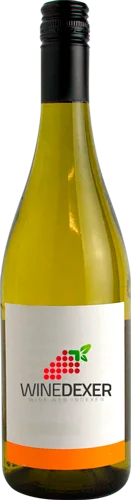
The Château de la Violette of Savoie

The Château de la Violette is one of the world's great estates. It offers 12 wines for sale in of Savoie to come and discover on site or to buy online.
Looking for the best Château de la Violette wines in Savoie among all the wines in the region? Check out our tops of the best red, white or effervescent Château de la Violette wines. Also find some food and wine pairings that may be suitable with the wines from this area. Learn more about the region and the Château de la Violette wines with technical and enological descriptions.
How Château de la Violette wines pair with each other generally quite well with dishes such as recipes .
On the nose the white wine of Château de la Violette. often reveals types of flavors of earth, microbio or vegetal and sometimes also flavors of oak, tree fruit or citrus fruit.
Savoie is a wine region in eastern France, in the mountainous areas just South of Lake Geneva and on the border with Switzerland. The location and geography of the region has very much defined its Character, which is fragmented, hilly and slightly Swiss. This is evident in the fresh, crisp white wines produced here, as well as in the labels of the region's wines. Many bear a white cross on a red background - the flag of Switzerland and Savoy.
About three quarters of the region's wines are white. This is mainly because most of the red Grapes would have difficulty maturing properly in the cooler Climate of Savoy. Jacquère is the most widely planted white grape, due to its high yield. Altesse, traditionally known here as Roussette, is used to produce some of the finest wines in Savoie, including its own appellations of Roussette de Savoie and Roussette de Bugey.
How Château de la Violette wines pair with each other generally quite well with dishes of shellfish, poultry or appetizers and snacks such as recipes of soupions à la provençale, coconut chicken and curry or tempura of vegetables and quick.
Roussane is a white grape variety, planted on an area of more than 700 ha. Originally from Montélimar, it is also found in Savoie, Languedoc and Roussillon, and grows very well in calcareous, poor, stony soil. It prefers to be pruned short. Roussane is also called fromenteau, barbin or bergeron. The young leaves are bubbled with fine down. When adult, they become thicker. It flowers in June and matures in mid-September. The grapes are cylindrical in shape, the berries are small and turn red when ripe, and the wine produced from pure Roussane is of extraordinary quality. It has a delicate aroma reminiscent of coffee, honeysuckle, iris and peony. The taste of this wine improves with age. It is part of the blend of the appellations Vin-de-Savoie, Côtes-du-Vallée du Rhône or Châteauneuf-du-Pape.
How Château de la Violette wines pair with each other generally quite well with dishes of beef, game (deer, venison) or mature and hard cheese such as recipes of roasted fillet of beef with parsley, wild boar, roe deer or doe leg or fondue franc comtoise digeste 100 % comté.
On the nose the red wine of Château de la Violette. often reveals types of flavors of spices, red fruit or black fruit.
Wine dominated by a strong acidity and/or biting tannins. In this case, the components of the wine need to melt, i.e. to harmonize during the maturation in the cellar.
How Château de la Violette wines pair with each other generally quite well with dishes of beef, veal or pork such as recipes of roast beef in a foie gras and chanterelle crust, blanquette of veal in pickle sauce or beef bourguignon with cookéo.
Pinot noir is an important red grape variety in Burgundy and Champagne, and its reputation is well known! Great wines such as the Domaine de la Romanée Conti elaborate their wines from this famous grape variety, and make it a great variety. When properly vinified, pinot noit produces red wines of great finesse, with a wide range of aromas depending on its advancement (fruit, undergrowth, leather). it is also the only red grape variety authorized in Alsace. Pinot Noir is not easily cultivated beyond our borders, although it has enjoyed some success in Oregon, the United States, Australia and New Zealand.
Planning a wine route in the of Savoie? Here are the wineries to visit and the winemakers to meet during your trip in search of wines similar to Château de la Violette.
Cultivated for a very long time in Savoie, it is not the black form of mondeuse blanche and Mondeuse grise is a natural mutation of mondeuse noire. According to Thierry Lacombe (I.N.R.A./Montpellier), the latter is the result of a natural intraspecific crossing between the black tressot and the white mondeuse. Mondeuse grise and Mondeuse noire are both registered in the official catalogue of wine grape varieties, list A1.