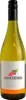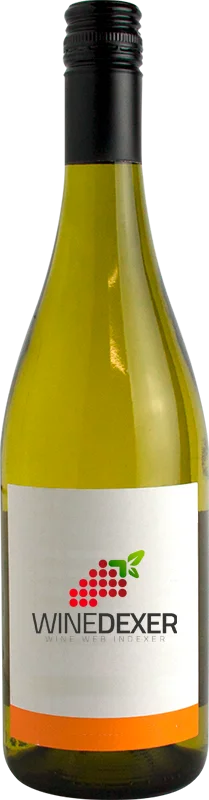
Winery Cascina delle Terre RosseL'Acerbina
 White wine


In the mouth this white wine is a with a nice freshness.
This wine generally goes well with vegetarian, appetizers and snacks or lean fish.
Taste structure of the L'Acerbina from the Winery Cascina delle Terre Rosse
Light | Bold | |
Dry | Sweet | |
Soft | Acidic |
In the mouth the L'Acerbina of Winery Cascina delle Terre Rosse in the region of Emilia-Romagna is a with a nice freshness.
Food and wine pairings with L'Acerbina
Pairings that work perfectly with L'Acerbina



Original food and wine pairings with L'Acerbina


The L'Acerbina of Winery Cascina delle Terre Rosse matches generally quite well with dishes of pasta, vegetarian or appetizers and snacks such as recipes of pasta gratin with courgettes and ham, quiche lorraine or parmesan crisps.
Details and technical informations about Winery Cascina delle Terre Rosse's L'Acerbina.
Discover the grape variety: Courbu noir
Courbu noir is a grape variety with red and bronze leaves. It originates from the Pyrenean vineyards where it occupies a little more than one hectare. It is completely different from the white Courbu. The adult leaves have five lobes and a petiolar sinus. The berries of the Courbu Noir are round. The berries are small, as are the clusters. The beginning of the veins and the petiolar point are red. The shoots of this grape variety bend to form a parasol. To hope for a significant harvest, it is important to prune it long. Its budburst period begins 3 days after Chasselas. As for its maturity, it is the third period. This variety is very sensitive to oidium, but it does not fear mildew very much. It produces light and fine wines. It is not very colourful and does not contain enough alcohol. Courbu Noir has two approved clones, 728 and 729.
Last vintages of this wine
The best vintages of L'Acerbina from Winery Cascina delle Terre Rosse are 0
Informations about the Winery Cascina delle Terre Rosse
The Winery Cascina delle Terre Rosse is one of of the world's greatest estates. It offers 8 wines for sale in the of Emilia-Romagna to come and discover on site or to buy online.

The wine region of Emilia-Romagna
Romagna/emilia">Emilia-Romagna is a Rich and fertile region in Northern Italy, and one of the country's most prolific wine-producing regions, with over 58,000 hectares (143,320 acres) of vines in 2010. It is 240 kilometers (150 miles) wide and stretches across almost the entire northern Italian peninsula, sandwiched between Tuscany to the South, Lombardy and Veneto to the north and the Adriatic Sea to the east. Nine miles of Liguria is all that separates Emilia-Romagna from the Ligurian Sea, and its uniqueness as the only Italian region with both an east and west coast. Emilia-Romagna's wine-growing heritage dates back to the seventh century BC, making it one of the oldest wine-growing regions in Italy.
The word of the wine: Mercaptan
Organic compound resulting from the combination of alcohol and sulphide (H2S) producing an unpleasant odour reminiscent of town gas and rotten eggs.