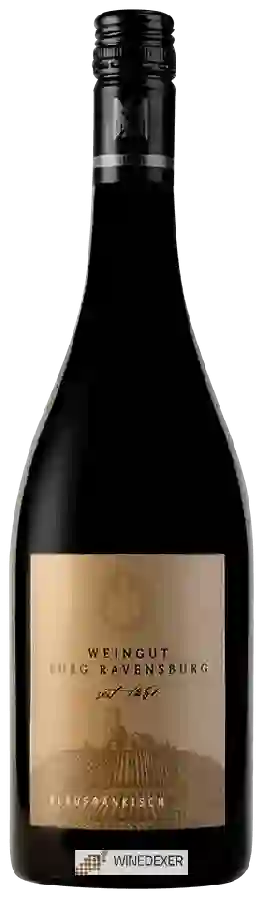
Winery Burg RavensburgBlaufränkisch
 Red wine



This wine generally goes well with pork, rich fish (salmon, tuna etc) or mature and hard cheese.
Wine flavors and olphactive analysis


On the nose the Blaufränkisch of Winery Burg Ravensburg in the region of Baden often reveals types of flavors of oak, spices or black fruit.
Food and wine pairings with Blaufränkisch
Pairings that work perfectly with Blaufränkisch



Original food and wine pairings with Blaufränkisch

The Blaufränkisch of Winery Burg Ravensburg matches generally quite well with dishes of pork, rich fish (salmon, tuna etc) or mature and hard cheese such as recipes of mushroom, bacon and gruyere quiche, tuna gratin or eggplant lasagna.
Details and technical informations about Winery Burg Ravensburg's Blaufränkisch.
Discover the grape variety: Goron de Bovernier
Its origin is most certainly Valdôtaine (Italy), still cultivated in the Entremont Valley in the Swiss Valais and totally unknown in other countries. It is the result of a natural cross between a still unknown or even extinct variety and the Cornalin du Valais or rouge du pays. It is the grandson of the humagne rouge or petit rouge and would also have genetic links with the rèze and the chasselas. The Goron de Bovernier is registered in the Official Catalogue of wine grape varieties list B.
Last vintages of this wine
The best vintages of Blaufränkisch from Winery Burg Ravensburg are 2013, 2012, 2015, 0
Informations about the Winery Burg Ravensburg
The Winery Burg Ravensburg is one of of the world's great estates. It offers 50 wines for sale in the of Baden to come and discover on site or to buy online.

The wine region of Baden
Baden is the southernmost of Germany's 13 official wine regions. It is also the warmest. Its relatively sunny, DryClimate permits the production of good-quality Spätburgunder (Pinot Noir) and ripe, relatively Full-bodied">Full-bodied examples of Grauburgunder (Pinot Gris) and Weissburgunder (Pinot Blanc). These are often made in oaked styles.
The word of the wine: Passerillage
Concentration of the grape by drying out, under the influence of wind or sun, as opposed to botrytisation, which is the concentration obtained by the development of the "noble rot" for which Botrytis cinerea is responsible. The word is mainly used for sweet wines.