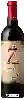
Winery Buena VistaThe Deputy Petite Sirah
 Red wine


In the mouth this red wine is a powerful with a nice balance between acidity and tannins.
This wine generally goes well with beef, game (deer, venison) or lamb.
Taste structure of the The Deputy Petite Sirah from the Winery Buena Vista
Light | Bold | |
Smooth | Tannic | |
Dry | Sweet | |
Soft | Acidic |
In the mouth the The Deputy Petite Sirah of Winery Buena Vista in the region of California is a powerful with a nice balance between acidity and tannins.
Wine flavors and olphactive analysis

Food and wine pairings with The Deputy Petite Sirah
Pairings that work perfectly with The Deputy Petite Sirah



Original food and wine pairings with The Deputy Petite Sirah
The The Deputy Petite Sirah of Winery Buena Vista matches generally quite well with dishes of beef, lamb or game (deer, venison) such as recipes of roast beef with garlic, lamb chops with honey and spices or pheasant in a casserole with white wine.
Details and technical informations about Winery Buena Vista's The Deputy Petite Sirah.
Discover the grape variety: Heroldrebe
Intraspecific crossing obtained in Germany in 1929 by August Karl Herold (1902-1973) between the blue Portuguese and the limberger. This variety can still be found in Germany, South Africa, etc. In France, it is practically unknown.
Informations about the Winery Buena Vista
The Winery Buena Vista is one of of the world's great estates. It offers 144 wines for sale in the of California to come and discover on site or to buy online.

The wine region of California
California is the largest and most important wine region in the United States. It represents the southern two-thirds (850 miles or 1,370 kilometers) of the country's west coast. (Oregon and Washington make up the rest. ) The state also spans nearly 10 degrees of latitude.
The word of the wine: Malolactic fermentation
Called second fermentation or malo for short. It is the degradation (under the effect of bacteria) of the malic acid naturally present in the wine into milder, less aggressive lactic acid. Some producers or wineries refuse this operation by "blocking the malo" (by cold and adding SO2) to keep a maximum of acidity which carries the aromas and accentuates the sensation of freshness.