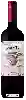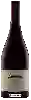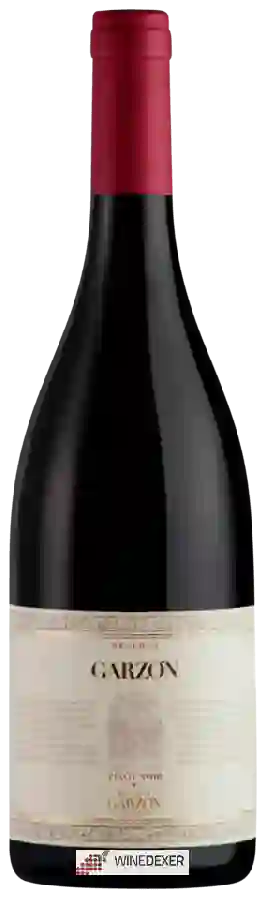
Bodega GarzónReserva Pinot Noir
 Red wine



This wine generally goes well with pork, poultry or veal.
The Reserva Pinot Noir of the Bodega Garzón is in the top 40 of wines of Maldonado.

Food and wine pairings with Reserva Pinot Noir
Pairings that work perfectly with Reserva Pinot Noir



Original food and wine pairings with Reserva Pinot Noir


The Reserva Pinot Noir of Bodega Garzón matches generally quite well with dishes of veal, pork or game (deer, venison) such as recipes of vitello tonnato, capellini with prosciutto or duck fillets with honey.
Details and technical informations about Bodega Garzón's Reserva Pinot Noir.
Discover the grape variety: Pinot noir
Elegant reds, light in colour with silky tannins, showing strawberry, cherry and raspberry aromas, evolving to forest floor, mushroom and spice with age. Fresh acidity, delicate finish. Star of the Côte d'Or (Romanée-Conti, Chambertin, Volnay), pillar of Champagne (Blanc de Noirs) and signature of Oregon, Central Otago and Sonoma Coast. An early-ripening Burgundian variety, one of the world's greatest.
Last vintages of this wine
The best vintages of Reserva Pinot Noir from Bodega Garzón are 2015, 0, 2012
Informations about the Bodega Garzón
The Bodega Garzón is one of of the world's great estates. It offers 45 wines for sale in the of Maldonado to come and discover on site or to buy online.

The wine region of Maldonado
Southeastern Uruguayan department on the Atlantic front, cooling ocean breezes, ancient crystalline and quartz soils with signature minerality. Signature Tannat as red king: Atlantic version silkier and fruitier than Madiran — blackberry, black cherry, plum, cocoa, herbs, softened and integrated tannins, saline freshness. Taut and saline Albarino as star white (citrus, peach, sea spray) facing the ocean. Small volumes (~4.
The word of the wine: Performance
Quantity of grapes harvested per hectare. In AOC, the average yield is limited on the proposal of the appellation syndicate, validated by the Inao. The use of high-performance plant material (especially clones) and better control of vine diseases have increased yields. This is not without consequences on the quality of the wines (dilution) and on the state of the market (too much wine). We must not over-simplify: low yields are not synonymous with quality, and it is often in years with generous harvests that we find the greatest vintages (1982 and 1986 in Bordeaux, 1996 in Champagne, 1990 and 2005 in Burgundy...).