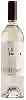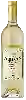
Winery BiltmoreHouse White
 White wine



This wine is a blend of 3 varietals which are the Chenin blanc, the Gewurztraminer and the Riesling.
This wine generally goes well with fruity desserts, pork or vegetarian.
Food and wine pairings with House White
Pairings that work perfectly with House White



Original food and wine pairings with House White



The House White of Winery Biltmore matches generally quite well with dishes of pork, rich fish (salmon, tuna etc) or shellfish such as recipes of currywurst, mackerel with quick mustard or seafood pie.
Details and technical informations about Winery Biltmore's House White.
Discover the grape variety: Chenin blanc
It most certainly originates from the Anjou region and is registered in the official catalogue of wine grape varieties on the A1 list. It can also be found in South Africa, Australia, Argentina, Chile, the United States (California), New Zealand, etc. It is said to be a descendant of Savagnin and to have sauvignonasse as its second parent (Jean-Michel Boursiquot 2019). On the other hand, Chenin blanc is the half-brother of verdelho and sauvignon blanc and is the father of colombard.
Last vintages of this wine
The best vintages of House White from Winery Biltmore are 0
Informations about the Winery Biltmore
The Winery Biltmore is one of of the world's great estates. It offers 96 wines for sale in the of North Carolina to come and discover on site or to buy online.

The wine region of North Carolina
North Carolina is a state located on the east coast of the United States, between the Appalachian Mountains to the west and the Atlantic Ocean to the east. The state's transitional Climate is well suited to growing grapes for wine production, and the state has a Long and illustrious wine-making history. North Carolina's finest wines are made from Vitis vinifera grapes such as Cabernet Sauvignon, Chardonnay, Merlot and Riesling. However, muscadine grapes (Vitis rotundifolia) are native to the region.
The word of the wine: Deposit
Solid particles that can naturally coat the bottom of a bottle of wine. It is rather a guarantee that the wine has not been mistreated: in fact, to avoid the natural deposit, rather violent processes of filtration or cold passage (- 7 or - 8 °C) are used in order to precipitate the tartar (the small white crystals that some people confuse with crystallized sugar: just taste to dissuade you from it)