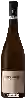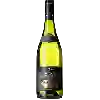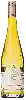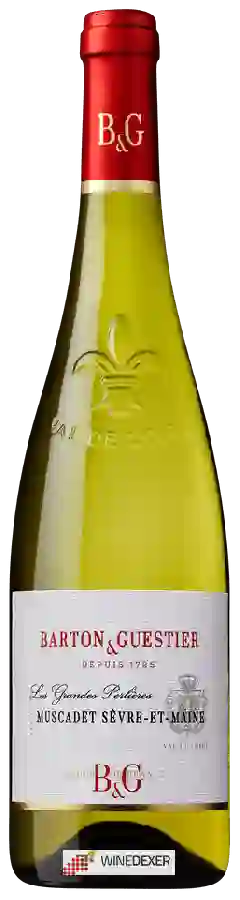
Winery Barton & GuestierMuscadet Sèvre-Et-Maine
 White wine



In the mouth this white wine is a with a nice freshness.
This wine generally goes well with appetizers and snacks, lean fish or shellfish.
Taste structure of the Muscadet Sèvre-Et-Maine from the Winery Barton & Guestier
Light | Bold | |
Dry | Sweet | |
Soft | Acidic |
In the mouth the Muscadet Sèvre-Et-Maine of Winery Barton & Guestier in the region of Loire Valley is a with a nice freshness.
Wine flavors and olphactive analysis



On the nose the Muscadet Sèvre-Et-Maine of Winery Barton & Guestier in the region of Loire Valley often reveals types of flavors of pineapple, cream or citrus and sometimes also flavors of apples, peach or lemon.
Food and wine pairings with Muscadet Sèvre-Et-Maine
Pairings that work perfectly with Muscadet Sèvre-Et-Maine



Original food and wine pairings with Muscadet Sèvre-Et-Maine

The Muscadet Sèvre-Et-Maine of Winery Barton & Guestier matches generally quite well with dishes of shellfish, appetizers and snacks or lean fish such as recipes of violet omelette, brioche shuttles or whiting fillet in papillotes.
Details and technical informations about Winery Barton & Guestier's Muscadet Sèvre-Et-Maine.
Discover the grape variety: Rondo
An interspecific cross between Zarya Severa (Sayanets Malengra x Amurensis) - a Russian variety - and Saint Laurent, obtained in 1964 by Vilem Kraus (Czech Republic) and then tested at the Geisenheim Research Institute (Germany). It can be found in Germany, Denmark, the Netherlands, Belgium, England, Ireland and Switzerland, but is virtually unknown in France.
Last vintages of this wine
The best vintages of Muscadet Sèvre-Et-Maine from Winery Barton & Guestier are 2018, 2017, 2015, 2012 and 2014.
Informations about the Winery Barton & Guestier
The Winery Barton & Guestier is one of of the world's great estates. It offers 147 wines for sale in the of Muscadet-Sevre et Maine to come and discover on site or to buy online.

The wine region of Muscadet-Sevre et Maine
The wine region of Muscadet-Sevre et Maine is located in the region of Muscadet of Muscadet of France. Wineries and vineyards like the Domaine de l'Ecu or the Domaine de Bellevue produce mainly wines white and red. The most planted grape varieties in the region of Muscadet-Sevre et Maine are Melon, Muscadelle and Folle blanche, they are then used in wines in blends or as a single variety. On the nose of Muscadet-Sevre et Maine often reveals types of flavors of cream, asparagus or baked apple and sometimes also flavors of honeydew melon, hay or citrus zest.
The wine region of Loire Valley
The Loire Valley is a key wine region in western France. It follows the course of the Loire River on its Long journey through the heart of France, from the inland hills of the Auvergne to the plains of the French Atlantic coast near Nantes (Muscadet country). Important in terms of quantity and quality, the region produces large quantities (about 4 million h/l each year) of everyday wines, as well as some of France's greatest wines. Diversity is another of the region's major assets; the styles of wine produced here range from the light, tangy Muscadet to the Sweet, honeyed Bonnezeaux, the Sparkling whites of Vouvray and the juicy, Tannic reds of Chinon and Saumur.
The word of the wine: Liqueur wine
Unfermented must with added brandy, also called liqueur wine: Pineau des Charentes, Floc de Gascogne, Macvin du Jura, Ratafia, Cartagène du Languedoc.