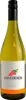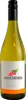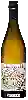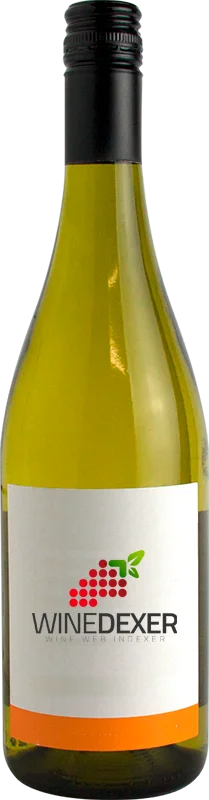
Winery BärenhofOsterberg Weissburgunder Trocken
 White wine
In the mouth this white wine is a with a nice freshness.
This wine generally goes well with rich fish (salmon, tuna etc), shellfish or mild and soft cheese.
Taste structure of the Osterberg Weissburgunder Trocken from the Winery Bärenhof
Light | Bold | |
Dry | Sweet | |
Soft | Acidic |
In the mouth the Osterberg Weissburgunder Trocken of Winery Bärenhof in the region of Pfalz is a with a nice freshness.
Food and wine pairings with Osterberg Weissburgunder Trocken
Pairings that work perfectly with Osterberg Weissburgunder Trocken



Original food and wine pairings with Osterberg Weissburgunder Trocken

The Osterberg Weissburgunder Trocken of Winery Bärenhof matches generally quite well with dishes of rich fish (salmon, tuna etc), shellfish or mild and soft cheese such as recipes of baked sea bream, scallops or pella.
Details and technical informations about Winery Bärenhof's Osterberg Weissburgunder Trocken.
Discover the grape variety: Gringet
Gringet is an ancient grape variety. It comes from the Arve valley, in Haute Savoie. It is very similar to Savagnin. This white grape variety has small bunches. Its berries are small, round and have a yellow-green skin that turns golden yellow when ripe. Generally, the gringet opens 10 days after the chasselas. Its production remains reasonable. Due to its drooping growth habit, it is recommended that this variety be trained and pruned short, as it is very sensitive to mildew and also fears erinosis and powdery mildew. It is one of those grape varieties that have an average second ripening period. It produces a wine that is light and lively at the same time, with some floral notes. It can also be used to make sparkling or semi-sparkling wines.
Informations about the Winery Bärenhof
The Winery Bärenhof is one of of the world's great estates. It offers 88 wines for sale in the of Pfalz to come and discover on site or to buy online.

The wine region of Pfalz
Pfalz is a key wine producing region in western Germany, located between the Rhein/Rhine river and the low-lying Haardt mountain range (a natural continuation of the Alsatian Vosges). It covers a rectangle of land 45 miles (75km) Long and 15 miles (25km) wide. To the NorthLiesRheinhessen; to the South, the French border and Alsace. In terms of both quality and quantity, Pfalz is one of Germany's most important regions, and one which shows great promise for the future.
The word of the wine: Grape variety
A type of vine plant and, by extension, the term used to designate the grapes that come from it. The term "table grape" is used to designate the grapes used for consumption, whereas the term "grape variety" is used to designate the wine grapes used to make wine.