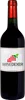
Winery BandoGaleirão Tinto
 Red wine


In the mouth this red wine is a powerful.
This wine generally goes well with poultry, beef or veal.
Taste structure of the Galeirão Tinto from the Winery Bando
Light | Bold | |
Smooth | Tannic | |
Dry | Sweet | |
Soft | Acidic |
In the mouth the Galeirão Tinto of Winery Bando in the region of Península de Setúbal is a powerful.
Food and wine pairings with Galeirão Tinto
Pairings that work perfectly with Galeirão Tinto



Original food and wine pairings with Galeirão Tinto

The Galeirão Tinto of Winery Bando matches generally quite well with dishes of beef, pasta or veal such as recipes of roasted fillet of beef with parsley, pasta with eggplant or beef colombo bourguignon style.
Details and technical informations about Winery Bando's Galeirão Tinto.
Discover the grape variety: Frankenthal
It is said to be of Austrian origin, from the Tyrol to be precise, and for some it comes from Franconia in Germany. Some ampelographers consider that Frankenthal and Kavcina crna or Zametovka grown in Slovenia are identical, with perhaps only a few clonal differences, which have yet to be confirmed, although it is true that they all have a large number of synonyms in common. Frankenthal can still be found in Belgium, the Netherlands, Germany, Austria, Hungary, Slovenia, Croatia, Italy, Portugal, England, Chile and Australia. For a long time, it was cultivated under greenhouses as a table grape in the North, East and West of France. Today, it has been almost abandoned and is therefore in danger of disappearing.
Last vintages of this wine
The best vintages of Galeirão Tinto from Winery Bando are 0
Informations about the Winery Bando
The Winery Bando is one of of the world's great estates. It offers 20 wines for sale in the of Península de Setúbal to come and discover on site or to buy online.

The wine region of Península de Setúbal
Setúbal Peninsula (also known as Península de Setúbal) is the Portuguese wine region immediately southeast of Lisbon, across the Tejo estuary. The Terroir in the area ranges from sandy coastal plains to the craggy, limestone-rich Serra Arribida hills. The area is known for its Dry red wines made from Castelão, and for its fortified wines and Sweet Moscatel de Setúbal. The wines produced here are made under three titles: two DOCs, Palmela and Setúbal, and one IGP.
The word of the wine: Mercaptan
Organic compound resulting from the combination of alcohol and sulphide (H2S) producing an unpleasant odour reminiscent of town gas and rotten eggs.