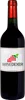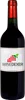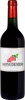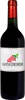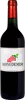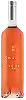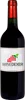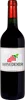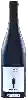
Winery ZweifelUto Kulm Rote Cuvée
 Red wine
This wine generally goes well with pork, poultry or veal.
Food and wine pairings with Uto Kulm Rote Cuvée
Pairings that work perfectly with Uto Kulm Rote Cuvée



Original food and wine pairings with Uto Kulm Rote Cuvée


The Uto Kulm Rote Cuvée of Winery Zweifel matches generally quite well with dishes of veal, pork or game (deer, venison) such as recipes of veal cutlets with cream sauce, tartiflette (from a real savoyard) or rabbit with green olives.
Details and technical informations about Winery Zweifel's Uto Kulm Rote Cuvée.
Discover the grape variety: Pinot noir
Pinot noir is an important red grape variety in Burgundy and Champagne, and its reputation is well known! Great wines such as the Domaine de la Romanée Conti elaborate their wines from this famous grape variety, and make it a great variety. When properly vinified, pinot noit produces red wines of great finesse, with a wide range of aromas depending on its advancement (fruit, undergrowth, leather). it is also the only red grape variety authorized in Alsace. Pinot Noir is not easily cultivated beyond our borders, although it has enjoyed some success in Oregon, the United States, Australia and New Zealand.
Informations about the Winery Zweifel
The Winery Zweifel is one of of the world's great estates. It offers 65 wines for sale in the of Zürich to come and discover on site or to buy online.

The wine region of Zürich
Zurich is a Swiss cantonal wine region covering all winegrowing sub-regions and vineyards within the borders of the Zurich canton. It is one of the more productive cantonal appellations in the German-speaking Northern Part of Switzerland. The main viticultural area here arches to the north, above the city of Winterthur, stretching up to Schaffhausen and even crossing the Rhine briefly around Eglisau, Rafz, Rudlingen, Wil and Huntwagen. This area is generally known as Zurcher Weinland, although as an area it is not precisely demarcated.
The word of the wine: Maceration
Prolonged contact and exchange between the juice and the grape solids, especially the skin. Not to be confused with the time of fermentation, which follows maceration. The juice becomes loaded with colouring matter and tannins, and acquires aromas. For a rosé, the maceration is short so that the colour does not "rise" too much. For white wines too, a "pellicular maceration" can be practised, which allows the wine to acquire more fat.