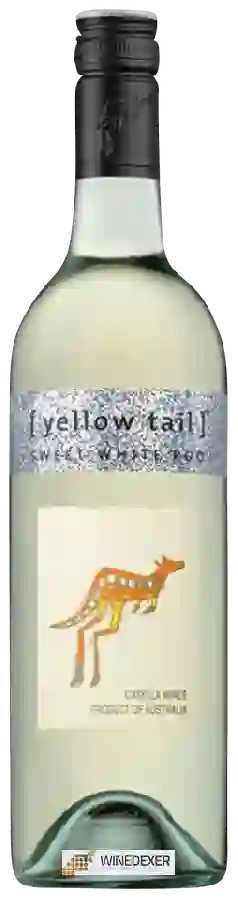
Winery Yellow TailSweet White Roo
 Sweet wine



This wine generally goes well with vegetarian, poultry or veal.
Food and wine pairings with Sweet White Roo
Pairings that work perfectly with Sweet White Roo



Original food and wine pairings with Sweet White Roo



The Sweet White Roo of Winery Yellow Tail matches generally quite well with dishes of veal, rich fish (salmon, tuna etc) or shellfish such as recipes of provencal veal tendrons, croque-monsieur with tuna or quick crayfish chicken.
Details and technical informations about Winery Yellow Tail's Sweet White Roo.
Discover the grape variety: Alicante
Alicante Henri Bouschet noir is a grape variety that originated in France (Languedoc). It produces a variety of grape specially used for wine making. It is rare to find this grape to eat on our tables. This variety of grape is characterized by large bunches of grapes of medium size. The Alicante Henri Bouschet noir can be found in several vineyards: South-West, Cognac, Bordeaux, Languedoc & Roussillon, Rhone valley, Provence & Corsica, Loire valley, Savoie & Bugey, Beaujolais, Armagnac.
Last vintages of this wine
The best vintages of Sweet White Roo from Winery Yellow Tail are 2013, 2014, 0
Informations about the Winery Yellow Tail
The Winery Yellow Tail is one of of the world's great estates. It offers 60 wines for sale in the of Queensland to come and discover on site or to buy online.

The wine region of Queensland
Queensland is one of six states and two "territories" that make up the Commonwealth of Australia. It covers approximately 1. 85 million square kilometres (715,300 square miles) in the north-eastern quarter of the "island continent". Although far from being renowned for its wine, Queensland has a growing wine industry, responding to a growing global demand and the happy combination of tourism and wine.
The word of the wine: Wine library
Cellar in which are kept bottles that retrace the history of a domain, a vintage, an exceptional wine, etc., and which constitute a collection. It is also said of a place that offers a very wide choice of wines served by the glass. The oenotheques are more and more widespread in the living rooms opened to the public.