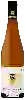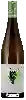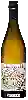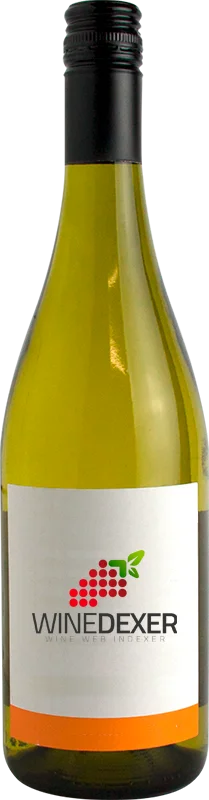
Weingut Dr. WehrheimDachsberg Grauer Burgunder
 White wine


In the mouth this white wine is a powerful with a nice freshness.
This wine generally goes well with pork, cured meat or mushrooms.
Taste structure of the Dachsberg Grauer Burgunder from the Weingut Dr. Wehrheim
Light | Bold | |
Dry | Sweet | |
Soft | Acidic |
In the mouth the Dachsberg Grauer Burgunder of Weingut Dr. Wehrheim in the region of Pfalz is a powerful with a nice freshness.
Food and wine pairings with Dachsberg Grauer Burgunder
Pairings that work perfectly with Dachsberg Grauer Burgunder


Original food and wine pairings with Dachsberg Grauer Burgunder

The Dachsberg Grauer Burgunder of Weingut Dr. Wehrheim matches generally quite well with dishes of pork, spicy food or mushrooms such as recipes of rabbit with prunes, couscous chicken and merguez or curried turkey paupiettes.
Details and technical informations about Weingut Dr. Wehrheim's Dachsberg Grauer Burgunder.
Discover the grape variety: Gaglioppo
A very old grape variety cultivated in southern Italy (Sicily, Calabria, etc.), the Greeks and Romans already knew it. It is related to sangiovese and mantonico bianco. According to Pierre Galet, Magliocco is identical to Galioppo.
Last vintages of this wine
The best vintages of Dachsberg Grauer Burgunder from Weingut Dr. Wehrheim are 0
Informations about the Weingut Dr. Wehrheim
The Weingut Dr. Wehrheim is one of of the world's great estates. It offers 59 wines for sale in the of Pfalz to come and discover on site or to buy online.

The wine region of Pfalz
Pfalz is a key wine producing region in western Germany, located between the Rhein/Rhine river and the low-lying Haardt mountain range (a natural continuation of the Alsatian Vosges). It covers a rectangle of land 45 miles (75km) Long and 15 miles (25km) wide. To the NorthLiesRheinhessen; to the South, the French border and Alsace. In terms of both quality and quantity, Pfalz is one of Germany's most important regions, and one which shows great promise for the future.
The word of the wine: Hat
Solid part (marc), composed of pips and skins (sometimes of the stalk), which forms at the top of the tank during fermentation. The pigeage consists in breaking this cap to put back in suspension these elements and to favour the exchanges between the juice and the skins.