The Weingut Siegloch of Württemberg
The Weingut Siegloch is one of the best wineries to follow in Württemberg.. It offers 42 wines for sale in of Württemberg to come and discover on site or to buy online.
Looking for the best Weingut Siegloch wines in Württemberg among all the wines in the region? Check out our tops of the best red, white or effervescent Weingut Siegloch wines. Also find some food and wine pairings that may be suitable with the wines from this area. Learn more about the region and the Weingut Siegloch wines with technical and enological descriptions.
How Weingut Siegloch wines pair with each other generally quite well with dishes of pork, shellfish or spicy food such as recipes of pulled pork (us pulled pork ), shrimp and chorizo risotto or balinese-style bonito.
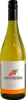
On the nose the white wine of Weingut Siegloch. often reveals types of flavors of vegetal. In the mouth the white wine of Weingut Siegloch. is a with a nice freshness.
Württemberg is known as Germany's premier red wine region. With almost 11,500 hectares (28,500 acres) of vineyards, it is the fourth-largest wine region in the country. Found adjacent to Baden and South of Franken, Wüttemberg is a particularly hilly and rural wine-region.
Almost 70-percent of Württemberg wines are red, predominantly made from Trollinger, SchwarzRiesling and Lemberger.
These red wines tend to be light and Fruity, due to the cool temperatures in this region. While more winemakers are beginning to make higher-alcohol, more heavily extracted examples, the local consumers are well accustomed to the style.
While Riesling represents nearly two-thirds of the white wines produced in Württemberg, Müller-Thurgau and Kerner are also traditionally grown here. Riesling from the Village of Flein (which means "Hard pebble") is particularly well regarded.
Württemberg’s main viticultural areas line the Neckar river, and spread up into tributary valleys such as the Rems, Enz, Kocher, Jagst and Tauber. There is also an isolated outcrop of vineyards around Friedrichshafen, on the shores of the Bodensee (Lake Constance).
In the North of the region, steep riverside slopes provide the dramatic and labor-intensive landscape on which most Württemberg vines are grown, making use of sunny, south-facing aspects wherever possible. They provide the region with a growing wine tourism industry.
How Weingut Siegloch wines pair with each other generally quite well with dishes of beef, pork or game (deer, venison) such as recipes of braised beef with carrots, croque madame or rabbit terrine in the style of a grandmother (pas de calais).
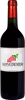
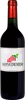
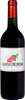
In the mouth the red wine of Weingut Siegloch. is a with a nice freshness.
How Weingut Siegloch wines pair with each other generally quite well with dishes of beef, lamb or spicy food such as recipes of improved horse steak, berber giblet frying pan or oriental stuffed vegetables.
A method of maturing practiced in Andalusia for certain sherries, which aims to continuously blend older and younger wines. It consists of stacking several layers of barrels; those located at ground level (solera) contain the oldest wines, the youngest being stored in the barrels on the upper level. The wine to be bottled is taken from the barrels on the lower level, which is replaced by younger wine from the upper level, and so on.
How Weingut Siegloch wines pair with each other generally quite well with dishes of spicy food or sweet desserts such as recipes of risotto milanese or tiramisu (original recipe).
White Riesling is a grape variety that originated in France (Alsace). It produces a variety of grape specially used for the elaboration of wine. It is rare to find this grape to eat on our tables. This variety of grape is characterized by small bunches, and small grapes. White Riesling can be found in many vineyards: Alsace, Loire Valley, Languedoc & Roussillon, Lorraine, Provence & Corsica, Rhone Valley, Savoie & Bugey, Beaujolais, South West.
Planning a wine route in the of Württemberg? Here are the wineries to visit and the winemakers to meet during your trip in search of wines similar to Weingut Siegloch.
Intraspecific crossing between the saint laurent and the limberger realized in 1922 and in Austria by Fritz Zweigelt (1888/1964) who named it rotburger. Very well known in Austria, it can be found in most Eastern countries, Japan, Germany, Great Britain, the Netherlands, Belgium, Switzerland, Italy, Canada, the United States, etc. In France, it is not very well known and yet this variety has interesting qualities when vinified as a single variety for both red and rosé wines. - Synonyms: rotburger, klosterneuburger, zweigelt blau, blauer-zweigelt in Germany, zweigeltrebe in Austria, Great Britain and the Czech Republic, blauer zwelgetrabe in Hungary, etc. (for all the synonyms of the grape varieties, click here !)