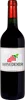
Winery Vinicola Mastricci AntonioSarmento Nero di Troia
 Red wine


In the mouth this red wine is a powerful.
This wine generally goes well with beef, lamb or pasta.
Taste structure of the Sarmento Nero di Troia from the Winery Vinicola Mastricci Antonio
Light | Bold | |
Smooth | Tannic | |
Dry | Sweet | |
Soft | Acidic |
In the mouth the Sarmento Nero di Troia of Winery Vinicola Mastricci Antonio in the region of Puglia is a powerful.
Food and wine pairings with Sarmento Nero di Troia
Pairings that work perfectly with Sarmento Nero di Troia



Original food and wine pairings with Sarmento Nero di Troia
The Sarmento Nero di Troia of Winery Vinicola Mastricci Antonio matches generally quite well with dishes of beef, pasta or lamb such as recipes of beef luc lake, my grandmother's macaroni gratin with gruyere cheese and smoked ham or irish stew.
Details and technical informations about Winery Vinicola Mastricci Antonio's Sarmento Nero di Troia.
Discover the grape variety: Petit Manseng
Petit Manseng is a white grape variety of Pyrenean origin. Its small berries have a hard, well-ventilated skin, which allows Petit Manseng to resist grey rot. On the other hand, this variety is very sensitive to noble rot, which concentrates the aromas and makes it possible to produce remarkable sweet wines with flavours of exotic fruits, grapefruit, honey, gingerbread, etc. Rich in alcohol and acidity, these wines are very well balanced and very fine. petit manseng also produces fruity dry white wines. It is also used in the AOC Béarn, Jurançon, Pacherenc-du-Vic-Bilh, Tursan...
Last vintages of this wine
The best vintages of Sarmento Nero di Troia from Winery Vinicola Mastricci Antonio are 2017, 2016, 0
Informations about the Winery Vinicola Mastricci Antonio
The Winery Vinicola Mastricci Antonio is one of of the world's greatest estates. It offers 22 wines for sale in the of Puglia to come and discover on site or to buy online.

The wine region of Puglia
Puglia (Apulia to many English speakers) is a Long, slender wine region in the extreme Southeast corner of Italy's "boot". To use the shoe analogy often used to illustrate the shape of Italy, Apulia extends from the tip of the heel to the mid-calf, where the spur of the Gargano Peninsula juts out into the Adriatic Sea. The heel (the Salento peninsula) occupies the southern half of the region and is of great importance for the identity of Puglia. Not only are there cultural and geographical differences from Northern Puglia, but the wines are also different.
The word of the wine: Licking
Operation consisting in sanitizing a barrel by introducing a wick of ignited sulphur which produces a release of sulphurous gas.