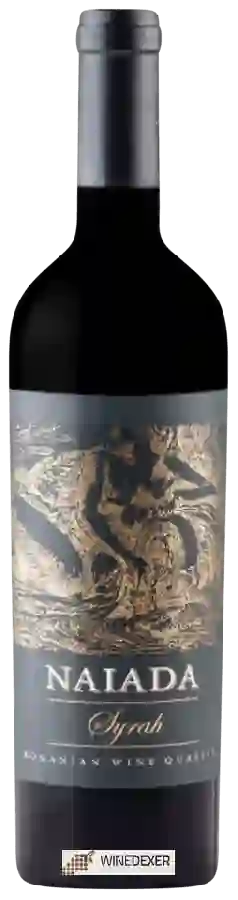
Winery Vinăria Ostrov - Domeniile OstrovNaiada Syrah
 Red wine


This wine generally goes well with beef, lamb or mature and hard cheese.
The Naiada Syrah of the Winery Vinăria Ostrov - Domeniile Ostrov is in the top 10 of wines of Danube.
Wine flavors and olphactive analysis


On the nose the Naiada Syrah of Winery Vinăria Ostrov - Domeniile Ostrov in the region of Danube often reveals types of flavors of oak, red fruit.
Food and wine pairings with Naiada Syrah
Pairings that work perfectly with Naiada Syrah



Original food and wine pairings with Naiada Syrah

The Naiada Syrah of Winery Vinăria Ostrov - Domeniile Ostrov matches generally quite well with dishes of beef, lamb or spicy food such as recipes of korean bibimbap, lamb shoulder confit or silvia's quick wolf fillet.
Details and technical informations about Winery Vinăria Ostrov - Domeniile Ostrov's Naiada Syrah.
Discover the grape variety: Moscatel rosado
It is said to be a cross between the diagalves and the Muscat of Alexandria obtained in Portugal. It can be found in Peru, Chile, Brazil, Argentina, Portugal, etc. In France, it is practically unknown, certainly because of its late maturity.
Last vintages of this wine

The best vintages of Naiada Syrah from Winery Vinăria Ostrov - Domeniile Ostrov are 2015, 2016, 0, 2018 and 2013.
Informations about the Winery Vinăria Ostrov - Domeniile Ostrov
The Winery Vinăria Ostrov - Domeniile Ostrov is one of of the world's greatest estates. It offers 61 wines for sale in the of Danube to come and discover on site or to buy online.

The wine region of Danube
Romania is located at the geographical crossroads between Central and South-Eastern Europe. The Romanian wine industry uses a wide range of indigenous and international red and white Grape varieties. Both vinifera and American grape species are present here, as well as a number of hybrids. The latter are chosen for their resistance to varying Climates.
The word of the wine: Consistency
In tasting, it is the equivalent of chewing (the chewiness of a tannic red wine is also mentioned). We then speak of firmness, fluidity, softness, hardness, and why not the crunchiness of an early wine by reference to the grape.