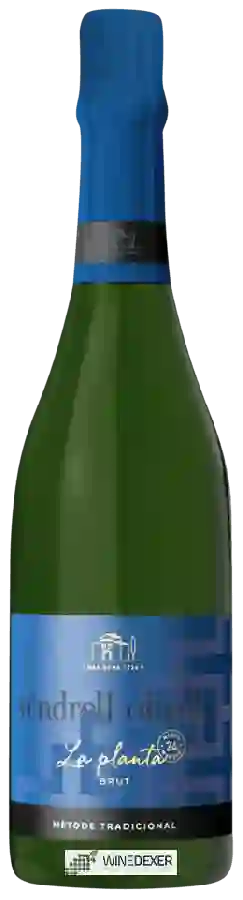
Winery Vendrell OlivellaLa Planta Brut
 Sparkling wine



In the mouth this sparkling wine is a with a nice vivacity and a fine and pleasant bubble.
This wine generally goes well with appetizers and snacks, lean fish or shellfish.

Taste structure of the La Planta Brut from the Winery Vendrell Olivella
Light | Bold | |
Soft | Acidic | |
Gentle | Fizzy |
In the mouth the La Planta Brut of Winery Vendrell Olivella in the region of Cava is a with a nice vivacity and a fine and pleasant bubble.
Food and wine pairings with La Planta Brut
Pairings that work perfectly with La Planta Brut



Original food and wine pairings with La Planta Brut


The La Planta Brut of Winery Vendrell Olivella matches generally quite well with dishes of shellfish, appetizers and snacks or lean fish such as recipes of paella josé style, smoked salmon and lemon cake or baked fish moroccan style.
Details and technical informations about Winery Vendrell Olivella's La Planta Brut.
Discover the grape variety: Lledoner pelut
Generous, supple reds with an intense ruby hue, rounded tannins and a broad palate, with solar aromas of ripe red fruits (cherry, raspberry, pomegranate), black fruits, garrigue, soft spices and Mediterranean notes. Full-bodied and warm. Component of Côtes du Roussillon AOC, Côtes du Roussillon Villages AOC and Priorat DOQ blends. Hairy-leaved mutation of grenache noir (lledoner = grenache in Catalan), a Catalan-Roussillon signature.
Last vintages of this wine
The best vintages of La Planta Brut from Winery Vendrell Olivella are 0
Informations about the Winery Vendrell Olivella
The Winery Vendrell Olivella is one of of the world's greatest estates. It offers 11 wines for sale in the of Cava to come and discover on site or to buy online.

The wine region of Cava
Spain's star traditional-method sparkler, the Iberian equivalent of Champagne. Three Catalan grapes blended: Macabeo (apple, freshness), Xarel-lo (body and herbaceous notes), Parellada (elegance and floral finesse). Chardonnay and Pinot Noir also allowed. From fruit-driven Brut to Gran Reserva (30 months on lees) with brioche and toasted notes.
The word of the wine: Extraction
All the methods (pumping over, punching down) that allow the colour and tannins to be extracted from the grape skin during maceration, before fermentation begins. It is also possible to macerate after fermentation, but gently, so as not to extract the tannins from the seeds, which are greener. Because of its solvent power, alcohol favours extraction.


