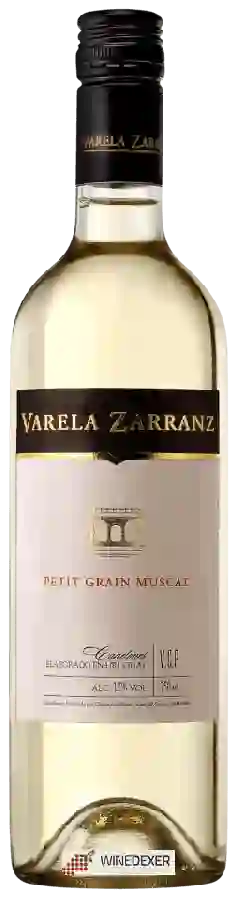
Winery Varela ZarranzPetit Grain Muscat
 White wine



This wine generally goes well with spicy food and sweet desserts.

Food and wine pairings with Petit Grain Muscat
Pairings that work perfectly with Petit Grain Muscat


Original food and wine pairings with Petit Grain Muscat
The Petit Grain Muscat of Winery Varela Zarranz matches generally quite well with dishes of spicy food or sweet desserts such as recipes of royal couscous or tiramisu (original recipe).
Details and technical informations about Winery Varela Zarranz's Petit Grain Muscat.
Discover the grape variety: Calabrese di Montenuovo
Light, simple reds with a clear ruby robe, smooth tannins and an airy palate with preserved acidity. Signature aromas of red fruits (cherry, raspberry), soft spices and fresh floral notes from Campania. Rustic, airy profile, nearly extinct. Conserved in heritage vineyards for its exceptional genetic and patrimonial value. Rare native Italian black grape from Campania, genetically identified as the mother of Sangiovese (father: Ciliegiolo).
Last vintages of this wine
The best vintages of Petit Grain Muscat from Winery Varela Zarranz are 2018, 2020, 2017, 2016 and 0.
Informations about the Winery Varela Zarranz
The Winery Varela Zarranz is one of of the world's greatest estates. It offers 35 wines for sale in the of Canelones to come and discover on site or to buy online.

The wine region of Canelones
Uruguay's main region north of Montevideo (~90% of national output). National star Tannat: powerful, structured reds with signature notes of blackberry, black plum, violet, leather, tobacco and spice, firm tannins and notable ageing potential — more Tannat planted here than in Madiran, its birthplace. Also round Merlot, peppery Cabernet Franc, spicy Syrah. Fresh saline Albarino whites.
The word of the wine: Cinsault
Cinsault is a southern black grape variety that can be found in the blends of most Mediterranean appellations, but most often as an accessory grape variety. It is undoubtedly most present in certain rosé wines (in Corbières, Côtes-de-Provence, etc.): it gives these wines highly appreciated aromas of strawberry, peach and raspberry. In vin de pays (IGP), it is often vinified on its own, usually as a rosé.