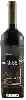
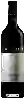
Winery Varela ZarranzCabernet Sauvignon
 Red wine


In the mouth this red wine is a powerful with a nice balance between acidity and tannins.
This wine generally goes well with poultry, beef or lamb.
Taste structure of the Cabernet Sauvignon from the Winery Varela Zarranz
Light | Bold | |
Smooth | Tannic | |
Dry | Sweet | |
Soft | Acidic |
In the mouth the Cabernet Sauvignon of Winery Varela Zarranz in the region of Canelones is a powerful with a nice balance between acidity and tannins.
Food and wine pairings with Cabernet Sauvignon
Pairings that work perfectly with Cabernet Sauvignon



Original food and wine pairings with Cabernet Sauvignon
The Cabernet Sauvignon of Winery Varela Zarranz matches generally quite well with dishes of beef, lamb or poultry such as recipes of roast beef in a foie gras and chanterelle crust, lamb stew with yoghurt and coriander or royal couscous (lamb, chicken, merguez).
Details and technical informations about Winery Varela Zarranz's Cabernet Sauvignon.
Discover the grape variety: Cabernet-Sauvignon
Cabernet-Sauvignon noir is a grape variety that originated in France (Bordeaux). It produces a variety of grape specially used for wine making. It is rare to find this grape to eat on our tables. This variety of grape is characterized by small bunches, and small grapes. Cabernet-Sauvignon noir can be found in many vineyards: South-West, Loire Valley, Languedoc & Roussillon, Cognac, Bordeaux, Armagnac, Rhone Valley, Provence & Corsica, Savoie & Bugey, Beaujolais.
Last vintages of this wine

The best vintages of Cabernet Sauvignon from Winery Varela Zarranz are 2018, 2014, 2015, 0 and 2019.
Informations about the Winery Varela Zarranz
The Winery Varela Zarranz is one of of the world's great estates. It offers 35 wines for sale in the of Canelones to come and discover on site or to buy online.

The wine region of Canelones
The Canelones administrative department, Northeast of the Uruguayan capital of Montevideo, is home to the majority of Uruguay's Vineyards and accounts for aRound 60 percent of all wine produced in the country. It Lies in the South of the small South American country, where the majority of vines are planted, inland from the Atlantic coast and the Rio de la Plata estuary. The region itself covers a broad arc approximately 50km (30 miles) Deep, drawn clockwise from the northwestern outskirts of Montevideo round to the coastline east of the capital city. The eponymous administrative capital of the region lies 50km (31 miles) to the north of Montevideo.
The word of the wine: Disgorging (champagne)
This is the evacuation of the deposit formed by the yeasts during the second fermentation in the bottle, by opening the bottle. The missing volume is completed with the liqueur de dosage - a mixture of wine and cane sugar - before the final cork is placed. For some years now, some producers have been replacing this sugar with rectified concentrated musts (concentrated grape juice) which give excellent results. A too recent dosage (less than three months) harms the gustatory harmony of the champagne.