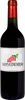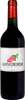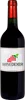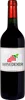
Winery Tumblong HillsTable of Plenty Sangiovese Rosé
 Pink wine
This wine generally goes well with pork, poultry or beef.
Food and wine pairings with Table of Plenty Sangiovese Rosé
Pairings that work perfectly with Table of Plenty Sangiovese Rosé



Original food and wine pairings with Table of Plenty Sangiovese Rosé



The Table of Plenty Sangiovese Rosé of Winery Tumblong Hills matches generally quite well with dishes of beef, veal or pork such as recipes of beef tongue in hot sauce, veal chop with mushrooms or white cabbage with bacon.
Details and technical informations about Winery Tumblong Hills's Table of Plenty Sangiovese Rosé.
Discover the grape variety: Sangiovese
Originally from Italy, it is the famous Sangiovese of Tuscany producing the famous wines of Brunello de Montalcino and Chianti. This variety is registered in the Official Catalogue of Wine Grape Varieties, list A1. According to recent genetic analysis, it is the result of a natural cross between the almost unknown Calabrese di Montenuovo (mother) and Ciliegiolo (father).
Informations about the Winery Tumblong Hills
The Winery Tumblong Hills is one of of the world's great estates. It offers 14 wines for sale in the of Australie du Sud to come and discover on site or to buy online.

The wine region of Australie du Sud
SouthAustralia is one of Australia's six states, located (as the name suggests) in the south of the vast island continent. It's the engine room of the Australian wine industry, responsible for about half of the country's total production each year. But there's more to the region than quantity - countless high-quality wines are produced here, most from the region's signature Grape, Shiraz. These include such fine, collectible wines as Penfolds Grange, Henschke Hill of Grace, Torbreck The Laird and d'Arenberg The Dead Arm.
The word of the wine: Chaptalization
The addition of sugar at the time of fermentation of the must, an ancient practice, but theorized by Jean-Antoine Chaptal at the dawn of the 19th century. The sugar is transformed into alcohol and allows the natural degree of the wine to be raised in a weak or cold year, or - more questionably - when the winegrower has a harvest that is too large to obtain good maturity.