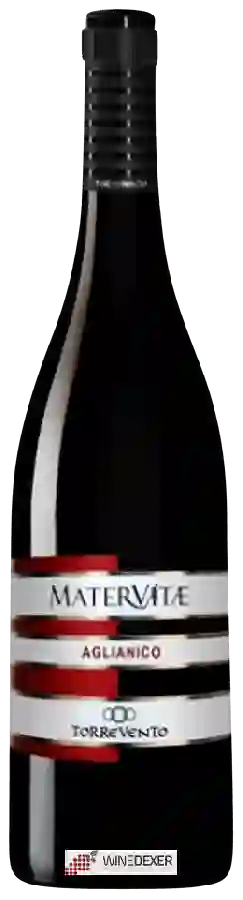
Winery TorreventoMatervitae Aglianico
 Red wine


In the mouth this red wine is a powerful.
This wine generally goes well with beef, lamb or pasta.

Taste structure of the Matervitae Aglianico from the Winery Torrevento
Light | Bold | |
Smooth | Tannic | |
Dry | Sweet | |
Soft | Acidic |
In the mouth the Matervitae Aglianico of Winery Torrevento in the region of Puglia is a powerful.
Food and wine pairings with Matervitae Aglianico
Pairings that work perfectly with Matervitae Aglianico



Original food and wine pairings with Matervitae Aglianico
The Matervitae Aglianico of Winery Torrevento matches generally quite well with dishes of beef, pasta or lamb such as recipes of adapted vietnamese fondue, chinese fried shrimp ravioli or lamb chops with tarragon cream.
Details and technical informations about Winery Torrevento's Matervitae Aglianico.
Discover the grape variety: Aglianico
Powerful, tannic reds with deep colour and tight structure, with aromas of black cherry, blackberry, leather, tobacco, coffee and balsamic-volcanic mineral notes. High acidity and very fine ageing potential, often compared to nebbiolo. Star of Taurasi DOCG in Campania and Aglianico del Vulture DOCG in Basilicata (vines planted on volcanic soils). Late-ripening southern Italian variety of probable ancient Greek origin.
Last vintages of this wine

The best vintages of Matervitae Aglianico from Winery Torrevento are 2013, 0, 2012
Informations about the Winery Torrevento
The Winery Torrevento is one of wineries to follow in Pouilles.. It offers 227 wines for sale in the of Puglia to come and discover on site or to buy online.

The wine region of Puglia
Heel of the boot, 80% red vineyard, sunny and generous. Fleshy, jammy Primitivo (= Zinfandel) with notes of black cherry, plum, chocolate and spices, powerful alcohol and melted tannins, a star in Primitivo di Manduria. Deep, structured Negroamaro (black-bitter) with a bitter finish in Salice Salentino. Structured Nero di Troia, spicy Susumaniello.
The word of the wine: Mouth
The mouth is the third stage of wine tasting after the eye and nose. In the mouth, the taster identifies the aromas through the retronasal route, the flavours and the texture. It is in the mouth that the overall balance of the wine is apprehended.