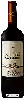
Winery Torre do FradeGrande Reserva
 Red wine


In the mouth this red wine is a powerful.
This wine generally goes well with poultry, beef or veal.

Taste structure of the Grande Reserva from the Winery Torre do Frade
Light | Bold | |
Smooth | Tannic | |
Dry | Sweet | |
Soft | Acidic |
In the mouth the Grande Reserva of Winery Torre do Frade in the region of Alentejano is a powerful.


Food and wine pairings with Grande Reserva
Pairings that work perfectly with Grande Reserva



Original food and wine pairings with Grande Reserva

The Grande Reserva of Winery Torre do Frade matches generally quite well with dishes of beef, lamb or veal such as recipes of beer goulash, lamb tagine with broad beans or moroccan style veal brochette.
Details and technical informations about Winery Torre do Frade's Grande Reserva.
Discover the grape variety: Millot Léon
Colourful and fruity reds with a deep purple hue, smooth tannins and an airy palate with moderate acidity, featuring aromas of dark fruits (blackcurrant, blackberry), herbal notes and a slight labrusca character. Early-ripening and extremely cold-hardy. Grown in Canada (Québec, Ontario) and the north-eastern USA for harsh continental climates. Synonym for Léon Millot, a French black hybrid obtained in 1911 by Eugène Kuhlmann in Alsace.
Last vintages of this wine
The best vintages of Grande Reserva from Winery Torre do Frade are 2018, 2008, 0
Informations about the Winery Torre do Frade
The Winery Torre do Frade is one of of the world's greatest estates. It offers 11 wines for sale in the of Alentejano to come and discover on site or to buy online.

The wine region of Alentejano
Star of southern Portugal's great reds, sunny and opulent wines. Typical blends: round fruity Aragonez (Tempranillo), spicy Trincadeira, Touriga Nacional (black fruits, violet), deep teinturier Alicante Bouschet, juicy Castelão. Fleshy reds with notes of plum, black cherry, cocoa and sweet spices, melted tannins. Ample fresh Antão Vaz and Arinto whites.
The word of the wine: Reassembly
During the vinification process, a "cap" is formed at the top of the vats with the solid parts (skin, pulp, pips, etc.), which contain tannins and colouring elements. Pumping over consists of emptying the vat from the bottom and pouring the juice back to the top, in order to mix the cap and the juice and to favour the exchange and the extraction. This old technique allows a better exchange between the solid parts and the liquid.