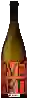
The Winery Tillingham of Sussex of England
The Winery Tillingham is one of the largest wineries in the world. It offers 18 wines for sale in of Sussex to come and discover on site or to buy online.
Looking for the best Winery Tillingham wines in Sussex among all the wines in the region? Check out our tops of the best red, white or effervescent Winery Tillingham wines. Also find some food and wine pairings that may be suitable with the wines from this area. Learn more about the region and the Winery Tillingham wines with technical and enological descriptions.
How Winery Tillingham wines pair with each other generally quite well with dishes of shellfish, appetizers and snacks or lean fish such as recipes of mussels with cream supers, ktipiti (greece) or fillets of sole en papillote.
On the nose the sparkling wine of Winery Tillingham. often reveals types of flavors of citrus, apples or butter and sometimes also flavors of green apple, lemon or pear. In the mouth the sparkling wine of Winery Tillingham. is a powerful with a nice vivacity and a fine and pleasant bubble.
The wine region of Sussex is located in the region of England of United Kingdom. Wineries and vineyards like the Domaine Nyetimber or the Domaine Nyetimber produce mainly wines sparkling, white and red. The most planted grape varieties in the region of Sussex are Pinot noir, Chardonnay and Ortega, they are then used in wines in blends or as a single variety. On the nose of Sussex often reveals types of flavors of non oak, salt or lemon zest and sometimes also flavors of melon, hazelnut or grass.
In the mouth of Sussex is a powerful with a nice vivacity and a fine and pleasant bubble. We currently count 36 estates and châteaux in the of Sussex, producing 154 different wines in conventional, organic and biodynamic agriculture. The wines of Sussex go well with generally quite well with dishes of shellfish, appetizers and snacks or lean fish.
How Winery Tillingham wines pair with each other generally quite well with dishes of pork, rich fish (salmon, tuna etc) or vegetarian such as recipes of quiche lorraine, grilled sardine fillets or magic cake cheese quiche.
On the nose the white wine of Winery Tillingham. often reveals types of flavors of citrus, peach or apricot and sometimes also flavors of stone, orange or earth.
Resulting from a sowing carried out in 1857 in Angers (Maine and Loire Valley) by Jean-Pierre Vibert and from 1863 marketed by the Moreau-Robert company. According to genetic analyses, this variety is the result of a cross between the royal madeleine and the blanc d'ambre. It has been used very often by hybridizers, the Csaba pearl being a good example. This variety is found in the United States (Washington), Germany and England, where it is vinified and its wine appreciated. - Synonymy: Angevine (for all the synonyms of the varieties, click here!).
How Winery Tillingham wines pair with each other generally quite well with dishes such as recipes .
On the nose the red wine of Winery Tillingham. often reveals types of flavors of earth, red fruit or oak and sometimes also flavors of microbio, vegetal or tree fruit.
In Burgundy, the fourth and final level of classification (above the regional, communal and premier cru appellations), designating the wines produced on delimited plots of land (the climats) whose name alone constitutes the appellation. The climats classified as Grand Cru are 32 in the Côte d'Or plus one in Chablis which is divided into 7 distinct climats. Representing barely 1.5% of the production, the Grand Crus are the aristocracy of Burgundy wines.
How Winery Tillingham wines pair with each other generally quite well with dishes such as recipes .
On the nose the pink wine of Winery Tillingham. often reveals types of flavors of microbio, tree fruit or citrus fruit and sometimes also flavors of red fruit.
Planning a wine route in the of Sussex? Here are the wineries to visit and the winemakers to meet during your trip in search of wines similar to Winery Tillingham.
An intraspecific cross between Müller-Thurgau and Siegerrebe obtained in 1948 by Hans Breider (1908-1960) at the Bavarian Research Station for Viticulture and Horticulture in Veitsnöchheim (Germany). Almost unknown in France, it can be found in Germany, Belgium, England, the United States and Canada. Its early maturity and muscatel taste have sometimes led to it being offered as a table grape on market stalls.