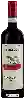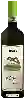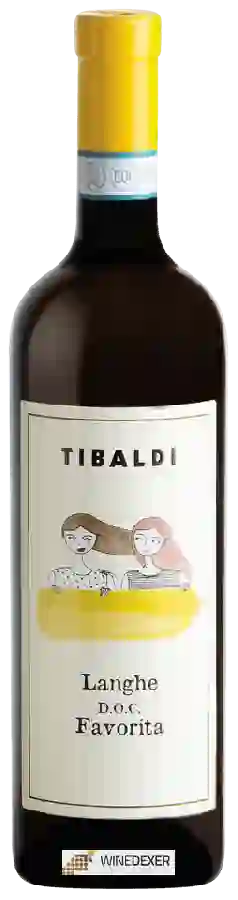
Winery TibaldiFavorita
 White wine


In the mouth this white wine is a powerful with a nice freshness.
This wine generally goes well with lean fish, shellfish or mature and hard cheese.

Taste structure of the Favorita from the Winery Tibaldi
Light | Bold | |
Dry | Sweet | |
Soft | Acidic |
In the mouth the Favorita of Winery Tibaldi in the region of Piedmont is a powerful with a nice freshness.
Food and wine pairings with Favorita
Pairings that work perfectly with Favorita



Original food and wine pairings with Favorita


The Favorita of Winery Tibaldi matches generally quite well with dishes of shellfish, pasta or mature and hard cheese such as recipes of oven-roasted breton lobster with salted butter from the jaguin brothers (the..., farfalle with gorgonzola or vincent's tuna mascarpone pizza.
Discover the grape variety: Favorita
Lively, aromatic dry whites with a pale golden robe, an elegant palate and preserved acidity, with signature aromas of citrus (lemon, grapefruit), white flowers (acacia), white-fleshed fruits (apple, pear) and saline notes. Refreshing profile, best drunk young. Grown in the Roero and Langhe, a Piedmontese alternative to Ligurian Vermentino. Genetically identical to Vermentino, an autochthonous white variety from Piedmont.
Last vintages of this wine
The best vintages of Favorita from Winery Tibaldi are 0
Informations about the Winery Tibaldi
The Winery Tibaldi is one of of the world's great estates. It offers 12 wines for sale in the of Langhe to come and discover on site or to buy online.

The wine region of Langhe
Italy's wine-and-food capital, UNESCO terroir of Piedmont. Heart of Nebbiolo: Barolo DOCG, "king of wines", and Barbaresco DOCG, age-worthy reds with firm tannins, vivid acidity and complex aromas of withered rose, morello cherry, tar, white truffle and undergrowth. More accessible Langhe DOC (Nebbiolo, crunchy Dolcetto, Freisa). Round almondy Arneis whites from Roero.
The wine region of Piedmont
Kingdom of Nebbiolo: Barolo and Barbaresco DOCG, long-ageing reds with firm tannins and lively acidity, complex aromas of withered rose, sour cherry, tar, truffle and undergrowth. More accessible, tangy Barbera on red fruit, supple, crisp Dolcetto. Sweet, floral sparkling Moscato d'Asti, mineral, lemony Gavi (Cortese) white, round, almondy Arneis from Roero. 50,000 ha across the Langhe, Roero and Monferrato, UNESCO.
The word of the wine: Sommelier
Person working in a restaurant and responsible for the wine service. The head sommelier is responsible for putting together the wine list, managing the sommelier brigade, and ensuring the sale of wines according to the dishes (food and wine pairing).