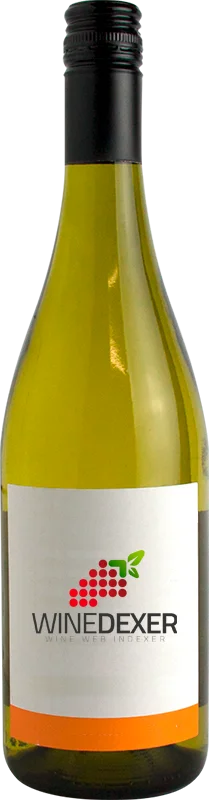
Winery TabaliReserva Dry Muscat
 White wine


This wine generally goes well with spicy food and sweet desserts.
Food and wine pairings with Reserva Dry Muscat
Pairings that work perfectly with Reserva Dry Muscat


Original food and wine pairings with Reserva Dry Muscat
The Reserva Dry Muscat of Winery Tabali matches generally quite well with dishes of spicy food or sweet desserts such as recipes of coconut chicken and curry or very simple muffins.
Details and technical informations about Winery Tabali's Reserva Dry Muscat.
Discover the grape variety: Foch
Interspecific crossing between 101-14 Millardet and Grasset (vitis riparia X vitis rupestris) and the goldriesling obtained by Eugène Kühlmann around 1911. With these same parents, he obtained among others the Léon Millot. Maréchal Foch is still found in Canada (Quebec) where it is the first black grape variety, in the north-east of the United States, etc. In France, it is hardly present in the vineyard any more, although it is registered in the Official Catalogue of Vine Varieties list A.
Last vintages of this wine

The best vintages of Reserva Dry Muscat from Winery Tabali are 2011, 2012, 0
Informations about the Winery Tabali
The Winery Tabali is one of of the world's great estates. It offers 69 wines for sale in the of Limarí Valley to come and discover on site or to buy online.

The wine region of Limarí Valley
Limarí Valley is one of the Northernmost winegrowing regions in Chile, located 200 miles (320km) north of the Chilean capital, Santiago. This location places it at a latitude of 30° South, well beyond the latitudes traditionally associated with winegrowing. To provide context, the equivalent parallel in the Northern Hemisphere passes through Egypt, Iraq and northern Mexico. Despite all of this, Limarí Valley is not Chile's most northerly region; a further 50 miles (80km) north Lies the Elqui Valley.
The wine region of Coquimbo
The Elqui Valley wine region is located 400 kilometers (250mi) North of the Chilean capital, Central-valley/maipo-valley/santiago">Santiago, at the very southern edge of the Atacama Desert. Its latitude of 29° makes it Chile's northernmost wine region, for now at least; the country's determined wine pioneers are now setting their sights as far north as the Atacama. Traditionally the region focused exclusively on producing Chile's trademark brandy, Pisco, but today Elqui Valley vineyards are producing Bright, intensely Aromatic wines, most notably from Sauvignon Blanc and Syrah. As might be expected in an arid, largely uninhabited region surrounded by desert, the valley is hot and Dry making irrigation essential in all vineyards here.
The word of the wine: Tartar (deposit)
White, chalky deposits that occur as a result of precipitation inside bottles and are often considered by consumers as a defect. They are in fact tartaric salts formed by tartaric acid, potassium and calcium naturally present in the wine. This deposit does not alter the quality of the wine and can be eliminated by a simple decanting.