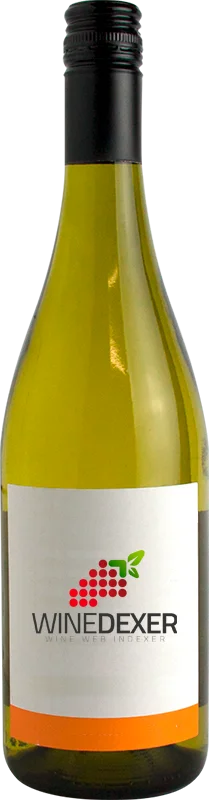
Winery Szőke Mátyás & ZoltánSauvignon Blanc
 White wine


This wine generally goes well with vegetarian, rich fish (salmon, tuna etc) or shellfish.
Wine flavors and olphactive analysis



On the nose the Sauvignon Blanc of Winery Szőke Mátyás & Zoltán in the region of Hungary often reveals types of flavors of vegetal, tree fruit or citrus fruit.
Food and wine pairings with Sauvignon Blanc
Pairings that work perfectly with Sauvignon Blanc



Original food and wine pairings with Sauvignon Blanc
The Sauvignon Blanc of Winery Szőke Mátyás & Zoltán matches generally quite well with dishes of rich fish (salmon, tuna etc), shellfish or vegetarian such as recipes of marinated raw salmon ('gravad lax' in swedish), seafood, chorizo and chicken paella from patou or spinach and goat cheese quiche.
Details and technical informations about Winery Szőke Mátyás & Zoltán's Sauvignon Blanc.
Discover the grape variety: Muscat rge de Madère
A very old variety of table grape that is now almost extinct. It can still be found in Italy, Portugal, Romania, Moldavia, ... in France, it can only be found among amateur gardeners and/or collectors. It is given as originating from Portugal, others from Romania. D.N.A. analyses carried out in 2007 allow us to confirm that it is indeed a natural intraspecific cross between the muscat à petits grains blancs and the sciaccarello or mammolo nero.
Last vintages of this wine
The best vintages of Sauvignon Blanc from Winery Szőke Mátyás & Zoltán are 0, 2013
Informations about the Winery Szőke Mátyás & Zoltán
The Winery Szőke Mátyás & Zoltán is one of of the world's great estates. It offers 27 wines for sale in the of Hungary to come and discover on site or to buy online.

The wine region of Hungary
Hungary, in Central Europe, has gained its reputation in the wine world through just a couple of wine styles, but for centuries it has been a wine-producing nation of considerable diversity. In addition to the Sweet wines of Tokaj and the Deep Bull's Blood of Eger, the Hungarian wine portfolio includes Dry whites from the shores of Lake Balaton, Somló and Neszmély, and finer reds from various regions, notably Villány, Sopron and Szekszard. Hungarian wine culture stretches back to Roman times and has survived numerous political, religious and economic challenges, including Islamic rule during the 16th Century (when Alcohol was prohibited) and the Phylloxera epidemic of the late 1800s. The modern Hungarian wine regions are distributed around the country.
The word of the wine: Vinification of sweet wines
Moelleux and liquoreux wines are characterized by the presence of residual sugars (natural sugar of the grape), not transformed into alcohol under the effect of yeasts. The fermentation is stopped by cold and by the addition of sulphur dioxide (sulphur).