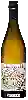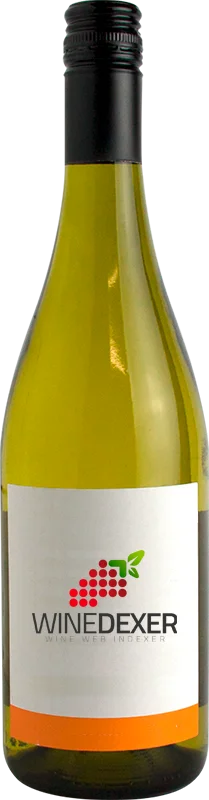
Stiftsweingut Frank MeyerSilvaner Trocken
 White wine
In the mouth this white wine is a with a nice freshness.
This wine generally goes well with pork, vegetarian or poultry.
Taste structure of the Silvaner Trocken from the Stiftsweingut Frank Meyer
Light | Bold | |
Dry | Sweet | |
Soft | Acidic |
In the mouth the Silvaner Trocken of Stiftsweingut Frank Meyer in the region of Pfalz is a with a nice freshness.
Food and wine pairings with Silvaner Trocken
Pairings that work perfectly with Silvaner Trocken



Original food and wine pairings with Silvaner Trocken


The Silvaner Trocken of Stiftsweingut Frank Meyer matches generally quite well with dishes of veal, pork or vegetarian such as recipes of cocotte chicken roulades, suckling pig leg in the oven or quiche without pastry.
Details and technical informations about Stiftsweingut Frank Meyer's Silvaner Trocken.
Discover the grape variety: Côt
Ribs have travelled a long way! In the Middle Ages it was indeed cultivated in the Yonne region. In Bordeaux, it was used in the production of vins clairets and was present in the Loire Valley where today it is only used in the AOC Touraine and Rosé d'Anjou. It goes by different names: Malbec in Bordeaux or Auxerrois in Cahors, in the Quercy vineyards, where it flourishes.it is a very old red grape variety with medium-sized bunches and berries with melting, juicy and sweet flesh. Very sensitive to frost, disease and temperature changes, it is very productive if preserved and if it reaches a good maturity.côt is used in the vineyards of several major appellations such as the AOC Médoc, Graves, Saint-Emilion, Pomerol, Bergerac, Pécharmant, Buzet, Malepère, Marcillac... Wines made from this grape variety are fruity, tannic, deep in colour and have good ageing potential Cultivated on a surface of 5.000 hectares in France, the côt is also very present in Argentina and Chile.
Informations about the Stiftsweingut Frank Meyer
The Stiftsweingut Frank Meyer is one of of the world's great estates. It offers 41 wines for sale in the of Pfalz to come and discover on site or to buy online.

The wine region of Pfalz
Pfalz is a key wine producing region in western Germany, located between the Rhein/Rhine river and the low-lying Haardt mountain range (a natural continuation of the Alsatian Vosges). It covers a rectangle of land 45 miles (75km) Long and 15 miles (25km) wide. To the NorthLiesRheinhessen; to the South, the French border and Alsace. In terms of both quality and quantity, Pfalz is one of Germany's most important regions, and one which shows great promise for the future.
The word of the wine: Old
This term can have several meanings, but generally refers to a wine that is several years old and has been aged in the bottle after having been in the barrel.