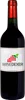
Winery Stallmann HiestandSpätburgunder Tafelstein
 Red wine



In the mouth this red wine is a with a nice freshness.
This wine generally goes well with poultry, beef or veal.
Taste structure of the Spätburgunder Tafelstein from the Winery Stallmann Hiestand
Light | Bold | |
Smooth | Tannic | |
Dry | Sweet | |
Soft | Acidic |
In the mouth the Spätburgunder Tafelstein of Winery Stallmann Hiestand in the region of Rheinhessen is a with a nice freshness.
Wine flavors and olphactive analysis



On the nose the Spätburgunder Tafelstein of Winery Stallmann Hiestand in the region of Rheinhessen often reveals types of flavors of non oak, earth or oak and sometimes also flavors of spices, red fruit.
Food and wine pairings with Spätburgunder Tafelstein
Pairings that work perfectly with Spätburgunder Tafelstein



Original food and wine pairings with Spätburgunder Tafelstein

The Spätburgunder Tafelstein of Winery Stallmann Hiestand matches generally quite well with dishes of beef, veal or game (deer, venison) such as recipes of fleischnacka leaf, chicken breast with curry and mushrooms or roast deer my grandmother's way.
Details and technical informations about Winery Stallmann Hiestand's Spätburgunder Tafelstein.
Discover the grape variety: Bia blanc
An ancient noble grape variety of the Isère Valley and the Rhône Valley department, which was very present before the phylloxera crisis. In the Saint Marcellin region (Isère), it was often associated with Jacquère and Marsanne. Almost unknown in other French regions and other wine-producing countries, it is in the process of disappearing, although it has been registered since 2011 in the Official Catalogue of wine grape varieties, list A1.
Last vintages of this wine
The best vintages of Spätburgunder Tafelstein from Winery Stallmann Hiestand are 2016, 2014, 2012, 2015 and 2013.
Informations about the Winery Stallmann Hiestand
The Winery Stallmann Hiestand is one of of the world's greatest estates. It offers 51 wines for sale in the of Rheinhessen to come and discover on site or to buy online.

The wine region of Rheinhessen
Rheinhessen is Germany's largest region for producing the quality wines of the Qualitätswein bestimmter Anbaugebiete (QbA) and Prädikatswein designations, with roughly 26,500 hectares (65,000 acres) of Vineyard">Vineyards as of 2014. Many of its most significant viticultural areas are favorably influenced by the Rhine river, which runs aLong its North and eastern borders. The Rhine, along with the Nahe river to the west and the Haardt mountains to its South, form a natural border. Rheinhessen covers an area south of Rheingau, north of Pfalz and east of Nahe, and is located within the Rhineland-Palatinate federal state.
The word of the wine: Jeroboam
Bottle with a capacity of 5 litres.