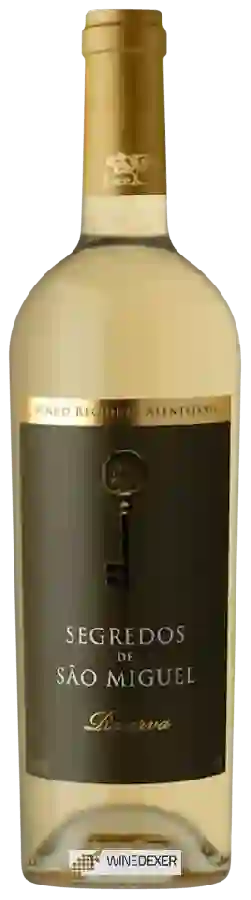
Winery Segredos de São MiguelReserva Branco
 White wine



In the mouth this white wine is a powerful.
This wine generally goes well with pork, lean fish or shellfish.
Taste structure of the Reserva Branco from the Winery Segredos de São Miguel
Light | Bold | |
Dry | Sweet | |
Soft | Acidic |
In the mouth the Reserva Branco of Winery Segredos de São Miguel in the region of Alentejano is a powerful.
Food and wine pairings with Reserva Branco
Pairings that work perfectly with Reserva Branco



Original food and wine pairings with Reserva Branco

The Reserva Branco of Winery Segredos de São Miguel matches generally quite well with dishes of pasta, pork or shellfish such as recipes of chinese noodles with vegetables, pizza cone or samoussa 3 reunionese cheeses.
Details and technical informations about Winery Segredos de São Miguel's Reserva Branco.
Discover the grape variety: Velteliner précoce
The early red rosé Velteliner is a grape variety originating from Italy. It produces a variety of grape specially used for wine making. It is rare to find this grape to eat on our tables. You can find Velteliner early red rosé in several vineyards: South-West, Cognac, Bordeaux, Savoie & Bugey, Provence & Corsica, Rhone Valley, Loire Valley, Beaujolais.
Last vintages of this wine
The best vintages of Reserva Branco from Winery Segredos de São Miguel are 2016, 0, 2018
Informations about the Winery Segredos de São Miguel
The Winery Segredos de São Miguel is one of of the world's greatest estates. It offers 14 wines for sale in the of Alentejano to come and discover on site or to buy online.

The wine region of Alentejano
Tejo">Alentejo is a well-known, highly respected wine region in eastern Portugal. This hot, Dry area covers approximately a third of the country and is best known for its red wine, the best of which are sold under the and Alentejo DOC (Denominacao de Origem Controlada) title. Wine from Alentejo is typically made from Aragonez (Tempranillo), Castelao, Trincadeira or a Rich, ripe, jammy blend of the three. Antao Vaz is the white variety of choice here, producing a good level of Acidity and tropical fruit flavors.
The word of the wine: Phenolic ripeness
A distinction is made between the ripeness of sugars and acids and the ripeness of tannins and other compounds such as anthocyanins and tannins, which will bring structure and colour. Grapes can be measured at 13° potential without having reached this phenolic maturity. Vinified at this stage, they will give hard, astringent wines, without charm.