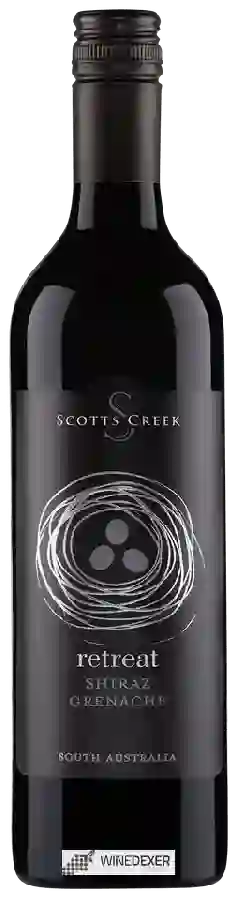
Winery Scotts CreekRetreat Shiraz - Grenache
 Red wine



This wine generally goes well with beef, lamb or mature and hard cheese.

Food and wine pairings with Retreat Shiraz - Grenache
Pairings that work perfectly with Retreat Shiraz - Grenache



Original food and wine pairings with Retreat Shiraz - Grenache

The Retreat Shiraz - Grenache of Winery Scotts Creek matches generally quite well with dishes of beef, lamb or spicy food such as recipes of beef tongue with pickle sauce, imene's tunisian ojja or lobster tail armorican style.
Details and technical informations about Winery Scotts Creek's Retreat Shiraz - Grenache.
Discover the grape variety: Temjanika
Intensely aromatic muscat whites, with a pale golden robe and an ample palate, with explosive signature aromas of muscat, white flowers (orange blossom, jasmine), exotic fruits and fresh grape. Also as sweet and late-harvest wines. Grown mainly in North Macedonia (Tikveš) and central Serbia, defining the aromatic identity of Balkan white wines. Autochthonous white variety of Serbia and North Macedonia, identical to Tamjanika.
Last vintages of this wine
The best vintages of Retreat Shiraz - Grenache from Winery Scotts Creek are 2014, 2017, 2015, 2016
Informations about the Winery Scotts Creek
The Winery Scotts Creek is one of of the world's greatest estates. It offers 12 wines for sale in the of Australie du Sud to come and discover on site or to buy online.

The wine region of Australie du Sud
Cradle of the great Australian Shiraz: powerful, sun-drenched reds with notes of blackberry, candied plum, pepper, chocolate and eucalyptus, ample tannins and vibrant fruit (Barossa, McLaren Vale). Firm, minty Cabernet Sauvignon on Coonawarra (terra rossa). Dry, lemony Riesling from Clare and Eden Valley, straight and taut. Fresh Sauvignon and Chardonnay from Adelaide Hills.
The word of the wine: Drain
Stopper, originally made of wood, used to plug barrels and more generally all wooden containers used to store or mature wine.