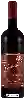
Winery Scherner - KleinhanssBlauer Spätburgunder Trocken
 Red wine


In the mouth this red wine is a with a nice freshness.
This wine generally goes well with poultry, beef or veal.
Taste structure of the Blauer Spätburgunder Trocken from the Winery Scherner - Kleinhanss
Light | Bold | |
Smooth | Tannic | |
Dry | Sweet | |
Soft | Acidic |
In the mouth the Blauer Spätburgunder Trocken of Winery Scherner - Kleinhanss in the region of Rheinhessen is a with a nice freshness.
Food and wine pairings with Blauer Spätburgunder Trocken
Pairings that work perfectly with Blauer Spätburgunder Trocken



Original food and wine pairings with Blauer Spätburgunder Trocken

The Blauer Spätburgunder Trocken of Winery Scherner - Kleinhanss matches generally quite well with dishes of beef, veal or game (deer, venison) such as recipes of venison stew to be prepared the day before, country-style veal roulades with risotto or civet of wild boar.
Details and technical informations about Winery Scherner - Kleinhanss's Blauer Spätburgunder Trocken.
Discover the grape variety: Cabernet-Dorsa
Intraspecific cross between the limberger and the dornfelder made in 1971 by Bernard Hill of the Weinsberg Research Institute in Germany. It can be found in the Netherlands, Germany, Belgium, Switzerland, Poland, the Czech Republic and the United States. Note that Cabernet Dorio has the same parents.
Last vintages of this wine
The best vintages of Blauer Spätburgunder Trocken from Winery Scherner - Kleinhanss are 0
Informations about the Winery Scherner - Kleinhanss
The Winery Scherner - Kleinhanss is one of of the world's great estates. It offers 29 wines for sale in the of Rheinhessen to come and discover on site or to buy online.

The wine region of Rheinhessen
Rheinhessen is Germany's largest region for producing the quality wines of the Qualitätswein bestimmter Anbaugebiete (QbA) and Prädikatswein designations, with roughly 26,500 hectares (65,000 acres) of Vineyard">Vineyards as of 2014. Many of its most significant viticultural areas are favorably influenced by the Rhine river, which runs aLong its North and eastern borders. The Rhine, along with the Nahe river to the west and the Haardt mountains to its South, form a natural border. Rheinhessen covers an area south of Rheingau, north of Pfalz and east of Nahe, and is located within the Rhineland-Palatinate federal state.
The word of the wine: Overmaturation
When the grapes reach maturity, the skin becomes permeable and progressively loses water, which causes a concentration phenomenon inside the berry. This is called over-ripening or passerillage.