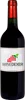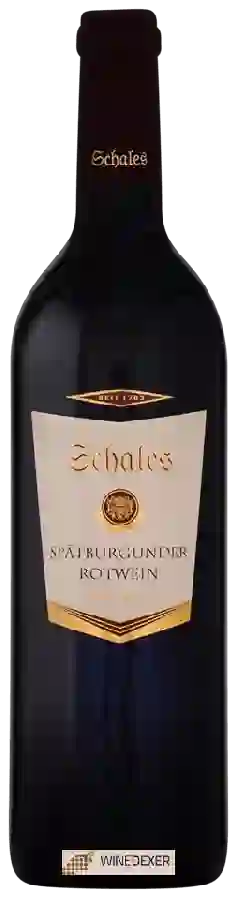
Winery SchalesSpätburgunder
 Red wine



In the mouth this red wine is a with a nice freshness.
This wine generally goes well with poultry, beef or veal.

Taste structure of the Spätburgunder from the Winery Schales
Light | Bold | |
Smooth | Tannic | |
Dry | Sweet | |
Soft | Acidic |
In the mouth the Spätburgunder of Winery Schales in the region of Rheinhessen is a with a nice freshness.
Food and wine pairings with Spätburgunder
Pairings that work perfectly with Spätburgunder



Original food and wine pairings with Spätburgunder

The Spätburgunder of Winery Schales matches generally quite well with dishes of beef, veal or game (deer, venison) such as recipes of hungarian goulash, sarthe pot or duck confit.
Details and technical informations about Winery Schales's Spätburgunder.
Discover the grape variety: Arneis
Elegant, crisp dry whites with a pale golden robe, a supple palate and preserved acidity of refined apple, pear, white peach, sweet almond, white flowers (acacia) and calcareous mineral notes. An airy, expressive profile. Absolute star of Roero Arneis DOCG on the Roero hills, also grown in Langhe DOC. Rescued from near-extinction in the 1980s by Vietti and Bruno Giacosa. Native Piedmontese grape of the hills of Cuneo.
Last vintages of this wine
The best vintages of Spätburgunder from Winery Schales are 0
Informations about the Winery Schales
The Winery Schales is one of of the world's great estates. It offers 70 wines for sale in the of Rheinhessen to come and discover on site or to buy online.

The wine region of Rheinhessen
71% white region: Riesling is king (5,000 ha), dry to off-dry, ripe yellow fruit, apple, citrus and fine saline minerality. Supple, floral Müller-Thurgau for everyday, the world's largest Silvaner plantation with herbaceous, straight notes. Historic cradle of off-sweet Liebfraumilch. Some supple reds (Dornfelder, Spätburgunder).
The word of the wine: SGN
Selection of noble grains. Appellation reserved for a type of sweet wine produced in Alsace.