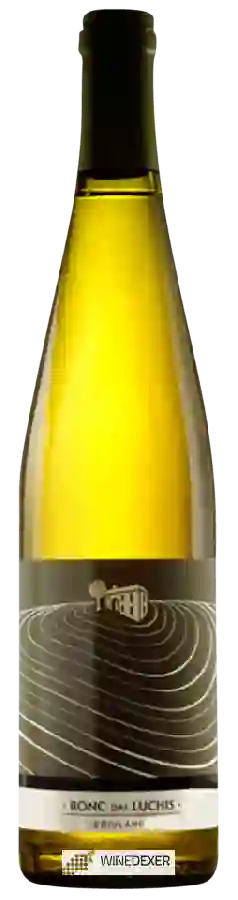
Winery Ronc dai LuchisFriulano
 White wine



In the mouth this white wine is a powerful with a nice freshness.
This wine generally goes well with lean fish, shellfish or mature and hard cheese.

Taste structure of the Friulano from the Winery Ronc dai Luchis
Light | Bold | |
Dry | Sweet | |
Soft | Acidic |
In the mouth the Friulano of Winery Ronc dai Luchis in the region of Friuli-Venezia Giulia is a powerful with a nice freshness.
Food and wine pairings with Friulano
Pairings that work perfectly with Friulano



Original food and wine pairings with Friulano


The Friulano of Winery Ronc dai Luchis matches generally quite well with dishes of pasta, shellfish or mature and hard cheese such as recipes of maultaschen ( swabian ravioli ), lobster in court-bouillon or savoy tomme and spinach pie.
Details and technical informations about Winery Ronc dai Luchis's Friulano.
Discover the grape variety: Hegel
Deeply coloured, simple fruity reds with a sustained purple colour, soft tannins and an airy palate with preserved acidity, showing aromas of red and black fruits. Productive. Grown in small quantities in Germany and the Benelux for organic and sustainably managed vineyards, part of the new generation of mildew- and powdery mildew-resistant varieties. German black hybrid obtained in the 20th century, a disease-resistant crossing.
Last vintages of this wine
The best vintages of Friulano from Winery Ronc dai Luchis are 2015, 0
Informations about the Winery Ronc dai Luchis
The Winery Ronc dai Luchis is one of of the world's greatest estates. It offers 12 wines for sale in the of Friuli-Venezia Giulia to come and discover on site or to buy online.

The wine region of Friuli-Venezia Giulia
Italian benchmark of great whites of elegance and minerality. Emblematic Friulano with notes of fresh almond, pear and white flowers, taut Ribolla Gialla, precise Pinot Grigio, lively Sauvignon and balanced Chardonnay. Rare sweet Picolit (DOCG), saline Malvasia Istriana. Rising reds: fruity spicy Refosco, more tannic Pignolo and Schioppettino.
The word of the wine: Cordial
Said of a warm, heady wine. Also used to describe wines and spirits with allegedly therapeutic properties.